Quick Facts
- Nutrient Multiplier: Whole almonds provide 51x more protein and 61x more fiber than the average cup of almond milk.
- The 2% Rule: The majority of commercial almond milk brands contain only 2% actual nuts, with the remaining 98% consisting of water and additives.
- Satiety Factor: The act of mastication and the presence of intact cell walls trigger fullness hormones that liquid calories completely bypass.
- Weight Loss: Whole nuts offer incomplete fat absorption, meaning your body does not actually absorb all the calories listed on the label.
- Natural vs Synthetic: Whole almonds are a powerhouse of natural Magnesium and Vitamin E, whereas milk often relies on synthetic fortification for its nutrient profile.
- Gut Health: The prebiotic fiber found in the almond skin and pulp is entirely removed during the commercial straining process.
Whole almonds are significantly more nutrient-dense than almond milk, offering much higher levels of protein and dietary fiber. While 100 grams of almonds contains approximately 21 grams of protein and 12 grams of fiber, almond milk typically contains less than 1 gram of each because it is largely composed of water.
The Dilution Dilemma: What’s Really in Your Carton?
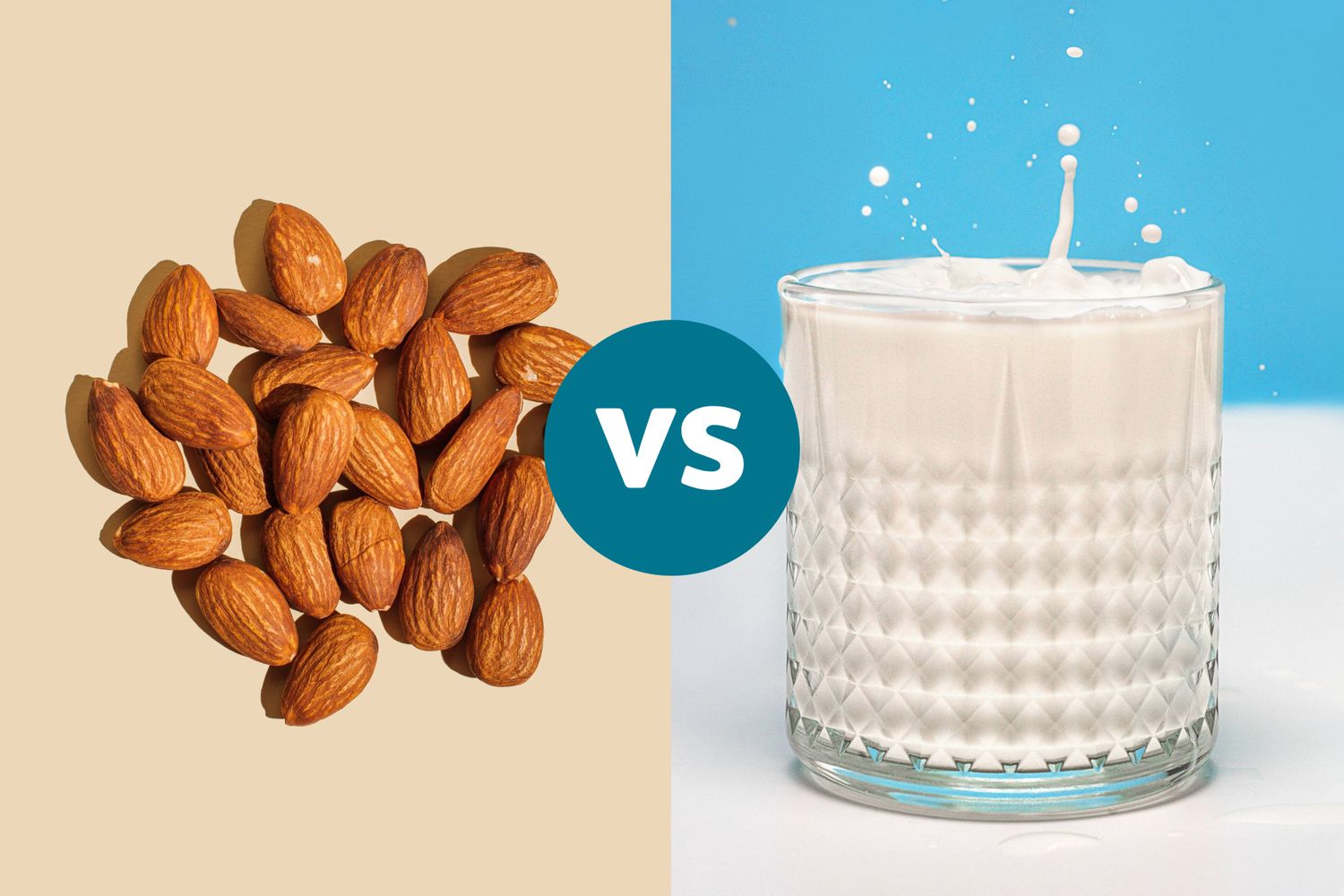
When you walk down the dairy alternative aisle, the packaging for almond milk often features lush, overflowing bowls of nuts. However, the nutritional differences between almonds and almond milk are staggering once you look past the marketing. Research into the manufacturing of these beverages reveals a significant water-to-nut ratio that favors the manufacturer’s bottom line rather than the consumer’s health.
Many commercial brands of almond milk contain as little as 2% actual almonds, with the remaining 98% of the beverage consisting of water and various additives. From a micronutrient perspective, this means an 8-ounce glass of many commercial almond milk brands contains the nutritional equivalent of only three to four whole almonds. When you choose a liquid over the solid nut, you are essentially paying for expensive, flavored water.
The industrial process further complicates the nutrient profile. To achieve that smooth, creamy consistency, manufacturers use centrifugation and high-heat treatment, often reaching 90°C. While this extends shelf life and improves texture, it can degrade some of the more delicate phytonutrients. Furthermore, the energy density of the liquid is so low that it rarely triggers the metabolic signals required to tell your brain you have actually "eaten" something.
Fiber and Protein: The Straining Effect
The most significant loss during the production of almond milk is the total removal of the pulp and the brown skin. In the world of micronutrient science, the skin is where the magic happens; it is loaded with antioxidant properties and flavonoids that work synergistically with Vitamin E. When manufacturers strain the liquid to create "milk," these components are discarded.
To understand the scale of this loss, consider the fiber and protein in almonds vs almond milk. Whole almonds provide significantly higher nutrient density than almond milk, containing approximately 51 times more protein and 61 times more dietary fiber per 100 grams. This massive disparity is illustrated in the table below:
| Nutrient (per 100g) | Whole Almonds (Raw) | Unsweetened Almond Milk | Nutrient Gap |
|---|---|---|---|
| Protein | ~21.2 g | ~0.4 g | 51x Greater |
| Dietary Fiber | ~12.5 g | ~0.2 g | 61x Greater |
| Magnesium | ~270 mg | ~7 mg | 38x Greater |
| Energy | ~579 kcal | ~13 kcal | 44x Density |
The protein found in whole almonds includes amandin, a relatively heat-stable protein. However, when you only consume the strained liquid, you are getting less than 1 gram of protein per serving. Compare this to the 8 grams of protein in a glass of cow's milk or soy milk, and it becomes clear that almond milk is not a viable protein source. For those focused on whole almonds vs almond milk for digestive health, the loss of prebiotic fiber is a major blow, as the pulp is what feeds the beneficial bacteria in your microbiome.
Mastication and Metabolism: Why Chewing Matters
One of the most overlooked aspects of the whole almonds vs almond milk debate is the physical act of eating. In nutrition science, we call this mastication. The psychology of chewing plays a vital role in our satiety index. When you chew a whole almond, your body begins a complex hormonal cascade. The mechanical breakdown of the nut, combined with the release of nutrients in the mouth, signals the brain to release cholecystokinin (CCK) and glucagon-like peptide-1 (GLP-1), both of which are critical for feeling full.
There are also unique weight loss benefits of whole almonds vs almond milk related to calorie absorption. Whole nuts possess rigid cellular walls composed of fiber. During digestion, the body is unable to fully break down these walls, meaning that a portion of the fat contained within the nut is never absorbed and is instead excreted. This phenomenon of incomplete fat absorption means that the net calories you gain from a handful of almonds are often 20% to 30% lower than what is printed on the nutrition label.
Conversely, drinking almond milk provides a very different metabolic experience. Because it is a liquid, it passes through the stomach quickly. Even if the beverage is unsweetened, it lacks the fiber "mesh" that slows down the absorption of other nutrients. While whole nuts have a very low glycemic index, some flavored almond milks can cause a sharper rise in blood sugar due to added thickeners and sweeteners. Therefore, the chewing almonds vs drinking almond milk benefits extend beyond just vitamins; it is about how your metabolism handles the energy.
Beyond the Fortification: Natural Minerals vs. Additives
As a vitamins and minerals editor, I focus heavily on bioavailability—how well your body can actually use the nutrients you consume. Whole almonds are a stellar natural source of Magnesium, potassium, and monounsaturated fats. These nutrients are "packaged" by nature with the necessary co-factors for absorption.
In contrast, the nutrient density of whole almonds vs fortified almond milk is a comparison of natural vs. synthetic. Because the "milk" is so diluted, manufacturers must add calcium carbonate, Vitamin A palmitate, and Vitamin D2 to make the product look nutritionally comparable to dairy on a label. While these fortifications are helpful for those on a vegan diet, they do not always offer the same level of synergy as the nutrients found in a whole, unprocessed nut.
Furthermore, we must address the "Hidden Burden" of commercial liquids. To keep the water and the tiny amount of nut oil from separating, companies use food additives such as carrageenan, guar gum, and xanthan gum. While generally recognized as safe, some individuals find these additives cause digestive distress. Additionally, the sugar and carbohydrate difference between almonds and almond milk can be vast; a flavored carton can contain up to 21 grams of sugar per serving, whereas raw almonds contain almost none.
Caution for Parents: While almond milk is a popular beverage, it is essential to remember that it is not a nutritionally adequate substitute for breast milk or infant formula. It lacks the necessary protein, fats, and iron required for infant growth and can lead to severe nutritional deficiencies if used as a primary milk source in the first year of life.
FAQ
Is almond milk as healthy as eating whole almonds?
No, almond milk is generally considered less healthy than whole almonds from a nutrient density perspective. While it is a low-calorie alternative for coffee or cereal, it lacks the significant protein, fiber, and natural antioxidants found in the whole nut. Most of the almond's health benefits are lost during the commercial filtration process.
Do whole almonds have more fiber than almond milk?
Yes, whole almonds contain vastly more fiber. Because the pulp and skins are removed to create a smooth liquid, almond milk typically contains less than 0.5 grams of fiber per serving, whereas a 100-gram serving of whole almonds provides about 12 grams of dietary fiber.
How many almonds are actually in a cup of almond milk?
Most commercial almond milk brands contain approximately 2% almonds. This translates to roughly three to four whole almonds per 8-ounce glass. The rest of the product is primarily water, thickeners, and added vitamins.
Which is better for weight loss: whole almonds or almond milk?
Whole almonds are generally better for long-term weight loss and management. Although they are higher in calories, they provide superior satiety due to their protein and fiber content, which prevents overeating. Furthermore, the body does not absorb all the calories in whole almonds due to the structure of their cell walls.
Does almond milk contain the same protein as whole almonds?
Almond milk contains only a fraction of the protein found in whole nuts. A glass of almond milk usually provides about 1 gram of protein, while the same weight in whole almonds would provide over 20 grams. If you are looking for a high-protein snack, the whole nut is the clear winner.
Final Verdict: Why the Whole Nut Wins
When we look at the health benefits of whole almonds for snacking, the evidence is overwhelming. Whole almonds provide a complex matrix of fiber, healthy fats, and plant-based protein that supports heart health, blood sugar stability, and weight management. They are a "living" food that requires effort to eat, which in turn rewards the body with a prolonged sense of fullness.
Almond milk, while a convenient and low-calorie dairy substitute for those with lactose intolerance, simply cannot compete on a gram-for-gram basis of nutrition. It is a processed beverage that sacrifices the most beneficial parts of the nut—the skin and the fiber-rich pulp—for the sake of texture and shelf life.
If your goal is to maximize your intake of Vitamin E and magnesium while maintaining gut health through prebiotic fiber, put down the carton and reach for the bag of raw, skin-on nuts. For the modern snacker, the whole nut remains the ultimate nutritional powerhouse.