Quick Facts
- Prep Time: 30 mins (plus soaking)
- Set Time: 6 hours total
- Dietary: Vegan-friendly options, Gluten-free, Refined sugar-free
- Key Benefits: Immune support, Cognitive focus
- Primary Ingredients: Raw cashews, elderberry elixir, pomegranate juice, pecans, medjool dates, lion's mane
- Difficulty: Intermediate (requires cold-setting technique and gelatin blooming)
- Nutrient Profile: High in polyphenols, Vitamin C, and healthy omega-3 fatty acids
Looking for a decadent yet functional treat? This no-bake elderberry pomegranate cheesecake combines immune-boosting elixirs with a creamy cashew base for a dessert that feeds your body and brain. By utilizing antioxidant-rich ingredients and plant-based adaptogens, this recipe transforms a traditional indulgence into a wellness tool that supports cognitive health and seasonal resilience.
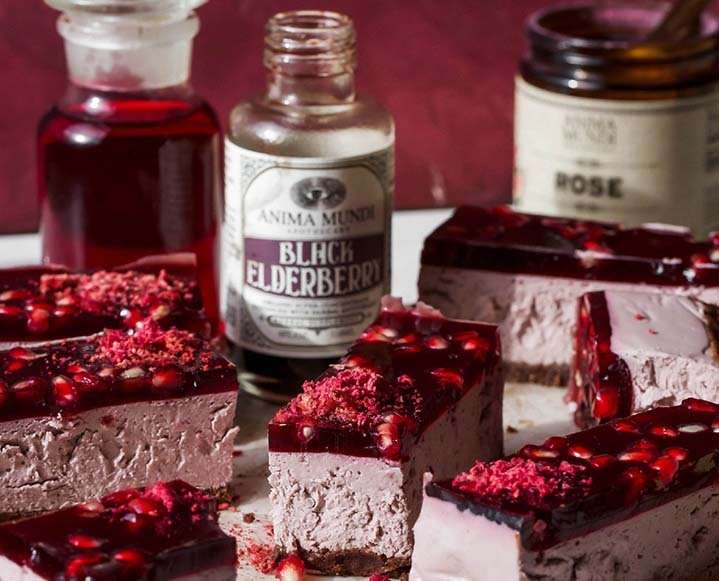
To make a no-bake elderberry pomegranate cheesecake, blend pecans, dates, and cacao for the base before pressing into a tin. The filling consists of soaked cashews, cream cheese or labneh, pomegranate juice, and rose powder, which is smoothed over the base and frozen. Finally, a jelly layer is created by heating pomegranate juice, gelatin, and elderberry elixir until dissolved, then poured over the cake to set in the refrigerator.
The Science of Functional Desserts: Why Elderberry & Pomegranate?
In my years as a botanical editor, I have seen a massive shift in how we perceive sweets. We are moving away from empty calories and toward functional foods that offer a therapeutic edge. This shift is reflected in the market data. The global elderberry market reached a value of USD 1.23 billion in 2024, driven by consumers seeking immune-supportive ingredients. Similarly, the pomegranate juice market was valued at USD 2,007.3 million in 2024 and is expected to grow significantly as we prioritize cardiovascular and antioxidant health.
Combining these two powerhouses creates a synergy of Vitamin C boost and anthocyanins. Elderberry is legendary in traditional herbalism for its ability to support the respiratory system, while pomegranate offers a dense concentration of punicalagins, which are potent antioxidants that protect cells from oxidative stress. When you add rose powder into the mix, you aren't just adding a floral note; you are introducing a concentrated source of vitamin C that enhances the bioavailability of the other phytochemicals.
Using natural sweeteners like maple syrup or honey ensures that we don't trigger the sharp insulin spikes associated with refined sugars. This is the hallmark of a nutrient dense cheesecake recipe: every component serves a biological purpose. From the healthy fats in the nuts to the functional mushrooms in the cream filling, this is dessert as medicine.
Step 1: Creating the Nutrient-Dense Cashew Base
The foundation of any no-bake elderberry dessert is the crust. Unlike traditional graham cracker crusts that rely on processed flour and hydrogenated oils, this version uses whole, raw ingredients. We begin with a blend of pecans and medjool dates. Pecans provide a buttery texture and essential minerals, while dates act as a natural binder and fiber source.
To start this nutrient dense cashew base cheesecake tutorial, place 1.5 cups of pecans into a food processor. Blitz them until they reach a coarse crumb. Add 1 cup of pitted medjool dates and a tablespoon of raw cacao powder. The cacao adds a deep, earthy undertone that complements the tartness of the berries later on. Process the mixture until it sticks together when pressed between your fingers.
If the mixture feels too dry, you can add a teaspoon of water or melted cacao butter. The cacao butter texture is superior because it hardens when chilled, providing a firm snap to the base. Once you have reached the desired consistency, press the mixture firmly into the bottom of a 7-inch springform pan. I recommend using the back of a spoon to ensure an even, flat surface. Place the pan in the freezer while you prepare the next layer.
Step 2: Blending the Adaptogenic Cream Filling
The heart of this recipe is the filling. To achieve that signature cheesecake tang without heavy dairy, we use a combination of raw cashews and labneh (or a high-quality vegan cream cheese). The secret to a successful raw cashew cream is the soaking process. You must soak your cashews for at least four hours—preferably overnight—in filtered water. This softens the nuts and neutralizes phytic acid, making the nutrients more accessible to your body.
In a high-speed blender, combine 2 cups of soaked cashews, 1/2 cup of maple syrup, 1/4 cup of pomegranate juice, and a splash of lemon juice. Now, we introduce the functional components. This is where we create a no-bake elderberry cheesecake with lions mane. Adding 1-2 teaspoons of lion’s mane powder provides cognitive support by stimulating nerve growth factor, while 1 tablespoon of rose powder offers a gentle Vitamin C boost.
Blend on high until the mixture is completely smooth. You should not feel any grit when you rub the cream between your fingers. This silky texture is essential for a high-quality no-bake elderberry pomegranate cheesecake. Once smooth, pour the filling over your prepared crust. Tap the pan on the counter to release any trapped air bubbles. Smooth the top with an offset spatula and return it to the freezer for at least two hours.
Step 3: Pomegranate Jelly Cheesecake Topping Instructions
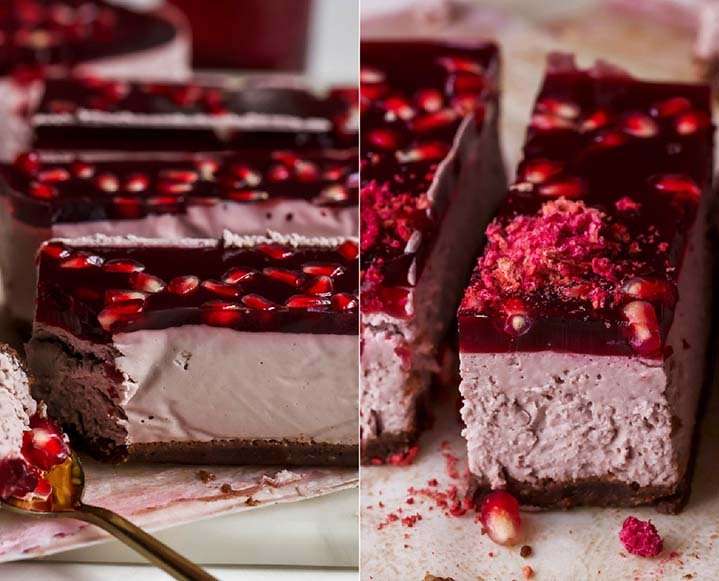
The final layer is what truly defines this dessert. A vibrant, translucent ruby topping that captures the essence of the fruit. This stage requires a bit of technical precision, specifically regarding the gelatin blooming process. If you are vegan, you can substitute agar-agar, but keep in mind the texture will be more brittle than the soft give of gelatin.
To follow these pomegranate jelly cheesecake topping instructions, start by pouring 1/2 cup of pomegranate juice into a small saucepan (off the heat). Sprinkle 1 tablespoon of high-quality grass-fed gelatin over the liquid. Let it sit for five minutes; it will begin to look wrinkled and thick. This is the bloom, and it ensures the jelly sets evenly without lumps.
Once bloomed, place the saucepan over very low heat. Add 1/4 cup of elderberry elixir and another 1/2 cup of pomegranate juice. Stir gently until the gelatin is fully dissolved. Do not let the mixture boil, as excessive heat can degrade the delicate antioxidants in the elderberry and pomegranate. Once dissolved, let the liquid cool to room temperature. It should still be liquid but no longer warm to the touch.
Carefully pour the liquid over the frozen cheesecake layer. If the filling isn't firm enough, the jelly will bleed into the cream, so ensure the cake has had its full two hours in the freezer. Move the cake to the refrigerator. These tips for setting pomegranate jelly on cheesecake are vital: the fridge provides a slower, more stable set than the freezer, resulting in a clearer finish. Let it chill for at least four hours.
Timing and Storage for Best Results
Patience is the most difficult ingredient in any cold-setting technique. While it may be tempting to slice into the cake early, the layers need time to bond. The elderberry pomegranate cheesecake is best served after a minimum of six hours of total setting time. This ensures that when you release the springform pan, the edges remain sharp and the layers distinct.
When it comes to storing your immune boosting elderberry dessert with rose powder, keep it in an airtight container in the refrigerator. It will stay fresh and maintain its structural integrity for up to five days. Because this recipe uses superfood infusions and raw fats, the flavors will actually deepen over the first 24 hours as the rose powder and elderberry mellow into the cashew cream.
If you wish to keep it longer, you can freeze individual slices. Simply thaw them in the fridge for 30 minutes before serving to regain that perfect creamy mouthfeel. Avoid leaving the cake at room temperature for extended periods, as the natural oils in the pecans and cashews can soften, causing the cake to lose its shape.
FAQ
Can I make a no-bake elderberry pomegranate cheesecake?
Yes, this recipe is specifically designed to be made without an oven. It relies on the cold-setting properties of soaked cashews, cacao butter, and a gelatin-based jelly topping to create a firm, sliceable texture.
How do I make an elderberry glaze for a cheesecake?
An elderberry glaze is created by simmering pomegranate juice and elderberry elixir with a thickening agent like gelatin or agar-agar. The key is to bloom the thickener first and then heat it gently until dissolved, ensuring a clear and smooth finish.
What is the best crust for a pomegranate cheesecake?
The best crust is one that provides a textural contrast to the creamy filling. A blend of pecans, medjool dates, and a hint of cacao provides a fiber-rich, nutrient-dense base that complements the tartness of the pomegranate and elderberry layers perfectly.
Are elderberries safe to eat in desserts?
Raw elderberries contain cyanogenic glycosides and should not be consumed untreated. However, using a commercially prepared elderberry elixir or syrup in your cheesecake is perfectly safe, as these products have been properly processed to neutralize those compounds while preserving the beneficial antioxidants.
How long does pomegranate cheesecake stay fresh in the fridge?
This cheesecake will stay fresh for up to five days when stored in an airtight container in the refrigerator. For the best flavor and texture, it is recommended to consume it within the first three days.
What garnishes go well with elderberry and pomegranate?
Fresh pomegranate arils are the classic choice, providing a burst of juice and a beautiful aesthetic. You can also use dried rose petals to highlight the rose powder in the filling or a few fresh mint leaves for a pop of contrasting color.