Quick Facts
- Origin: Sonoran Sierras, Mexico
- Flavor Profile: Sweet, spicy, tart, and tannic
- Base: Concentrated hibiscus tea and strawberry broth
- Core Ingredients: Habanero, lime (or citric acid), and ripe strawberries
- Menu Growth: 106% increase over a four-year period
- Serving Style: Chilled or room temperature with sushi-grade seafood or crunchy vegetables
Experience the vibrant evolution of a Mexican classic with our spicy strawberry aguachile. This chili water variation balances heat and fruit for the ultimate summer appetizer. Strawberry aguachile is a vibrant twist on the traditional Mexican chili water appetizer, replacing or augmenting the classic lime base with a fruit-forward marinade. It typically features blended strawberries, habanero or serrano peppers, and often includes hibiscus tea to provide tartness and tannic depth. This chilled dish can be served with sushi-grade seafood like sea scallops or as a vegan-friendly salad using crunchy vegetables.

The Four Pillars of Flavor: Mastering the Marinade
When you first encounter a bowl of strawberry aguachile, the visual is arresting. The liquid is an electric pink, shimmering with the promise of summer. But the real mastery lies in the architecture of the flavor profile balance. Unlike a standard ceviche, which relies almost exclusively on citrus to cook the protein, aguachile is about the liquid soul—the chili water itself. To create a truly professional strawberry aguachile, you must balance four distinct pillars: the sweetness of the fruit, the creeping heat of the pepper, the sharp acidity of the citrus, and the grounding tannins of the tea.
Most home cooks reach instinctively for lime juice, but the pros often look toward using hibiscus tea for tartness in strawberry aguachile. While lime provides a bright acidity, hibiscus tea aguachile offers a floral, botanical infusion that adds a sophisticated layer of complexity. This tannic notes profile acts as a bridge between the sugar in the berries and the fire in the peppers. We recommend a 4:1 ratio for steeping the tea to ensure it is concentrated enough to stand up to the other bold ingredients.
Balancing habanero heat in strawberry aguachile marinade is perhaps the most delicate part of the process. Habaneros are prized for their tropical, fruity aroma, which naturally complements strawberries, but their heat can easily become a blunt instrument. By removing the seeds and pith, and then steeping the pepper in the strawberry liquid rather than blending it raw, you can achieve a controlled, elegant warmth. For those seeking even more precision, using citric acid vs lime juice in aguachile can be a game-changer. Citric acid provides a consistent, sharp bite that doesn't mask the delicate strawberry aguachile essence with the specific flavor of lime oil.
Pro-Tip: The Maceration Secret To extract the most vibrant color and flavor from your fruit, toss your sliced strawberries with a pinch of salt and a teaspoon of sugar about 20 minutes before blending. This draws out the natural juices, creating a more intense strawberry aguachile base.
Technique Focus: The 'No-Press' Broth and Silky Texture
The difference between a rustic home-cooked dish and a chef-quality appetizer often comes down to texture. A common mistake is simply blending strawberries and peppers and pouring the thick pulp over the seafood. To achieve a professional result, you want a silky smooth liquid that feels like a botanical infusion rather than a smoothie. This is where the technique of the no-press broth comes into play.
After blending your ripe strawberries with the habanero fruit marinade and hibiscus tea, you must resist the urge to force the mixture through a sieve. Instead, let it gravity-strain. How to strain strawberry aguachile for a silky marinade involves lining a fine mesh sieve with a layer of cheesecloth and letting the liquid drip through naturally. Pressing the solids introduces pectin and fiber, which clouds the liquid and makes it thick. Gravity-straining ensures a clear, jewel-toned broth that allows the bright acidity and floral notes to shine.
Furthermore, we must address the salinity. While sea salt is standard, adding soy sauce or fish sauce for aguachile salinity can provide an unexpected umami depth. This subtle addition doesn't make the dish taste like soy; rather, it rounds out the strawberry aguachile profile, making it taste more savory and satisfying. This is a common trick in modern Mexican ceviche style preparations where chefs seek to maximize the depth of the chili water.
The Seafood Variation: Scallops and Prawns
Traditionally, aguachile was a dish of the Sonoran Sierras, often made with rehydrated dried meat or shrimp. In its modern, fruit-forward evolution, it has become a favorite canvas for sushi-grade seafood. The delicate sweetness of sea scallops is a perfect partner for the strawberry aguachile broth. Because scallops have a buttery, mild flavor, they don't compete with the habanero fruit marinade; instead, they act as a clean vessel for the spice.
When considering how to pair sea scallops with strawberry aguachile, the cut is crucial. Slice the scallops into thin rounds or "coins" to increase the surface area that comes into contact with the marinade. Unlike traditional lime-heavy ceviches, you don't want to leave the seafood in the liquid for long. The goal is to dress the seafood just before serving.
Interestingly, serving strawberry aguachile at room temperature vs chilled can drastically change the experience. While a chilled broth is refreshing on a hot July afternoon, serving the dish slightly closer to room temperature allows the more delicate flavors of the sushi-grade seafood to bloom. The cold can sometimes dull the taste buds, muting the subtle tannic notes of the hibiscus. Given that aguachile is currently found on 0.7% of U.S. menus, it represents a significant opportunity for home entertainers to provide a unique, restaurant-quality experience.
The Plant-Based Twist: Vegan Aguachile with Jicama and Beets
One of the most exciting aspects of this dish is its adaptability. For those looking for a vegan strawberry aguachile, the botanical infusion of the marinade provides a perfect environment for crunchy, earthier ingredients. Replacing seafood doesn't mean sacrificing the spirit of the dish; it’s about finding the best crunchy vegetables for strawberry aguachile salad to provide that essential textural contrast.
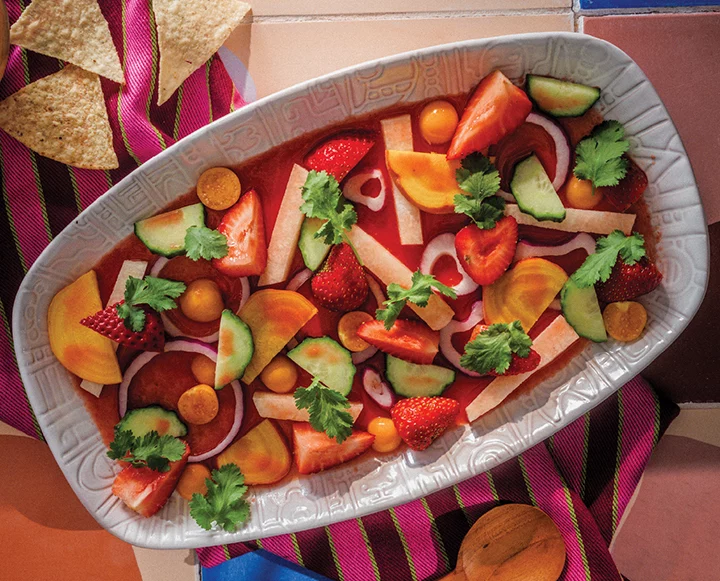
A vegan strawberry aguachile recipe with jicama is a crowd favorite. Jicama has a water-rich, apple-like crunch that mimics the freshness of raw shrimp without the animal protein. Pairing jicama with golden beets adds a beautiful visual contrast and a grounding earthiness that balances the high-toned notes of the strawberry and habanero.
To prepare this, slice your jicama and golden beets into matchsticks or thin mandolin slices. Allow them to marinate in the chilled strawberry-habanero liquid for about ten minutes—longer than you would with seafood—to allow the flavors to penetrate the denser cell walls of the vegetables. Garnish the finished plate with radish microgreens and cilantro to add a peppery, fresh finish.
History & Heritage: From Sonoran Sierras to Modern Tables
The journey of aguachile from the rugged landscapes of Northern Mexico to the high-end bistros of New York and Los Angeles is a testament to the power of Mexican ceviche style cooking. Originally, the dish was a simple preparation used by cattle ranchers in the Sonoran Sierras. They would take machaca (dried beef) and rehydrate it in a mixture of water and the tiny, fiery Chiltepin chiles that grew wild in the mountains. This was the original chili water.
As the dish moved toward the coast, shrimp replaced the beef, and lime juice replaced the water. Today, chefs have taken it a step further, experimenting with fruit-forward marinades that highlight the regional bounty of the Americas. The inclusion of strawberries and hibiscus reflects a modern desire to blend traditional heat with botanical sophistication.
This innovation is hitting a receptive audience. In the United States, approximately 71% of diners have consumed Mexican cuisine within a three-month period, showing a deep-seated love for these flavors. Furthermore, 56% of U.S. residents eat spicy foods at least once per week. The strawberry aguachile sits at the intersection of these trends, offering a bold, spicy experience that feels remarkably fresh and contemporary.
FAQ
What is strawberry aguachile made of?
The dish is composed of a vibrant marinade made from blended fresh strawberries, habanero or serrano peppers, and often a concentrated hibiscus tea. This liquid is used to dress seafood like scallops or shrimp, or vegetables like jicama, and is typically seasoned with lime juice, salt, and sometimes a touch of soy sauce for umami depth.
Is strawberry aguachile spicy or sweet?
It is a complex balance of both. While the strawberries provide a natural sweetness and the hibiscus adds tartness, the habanero ensures a significant level of spice. The goal is to have the sweetness of the fruit enhance the tropical notes of the chili without making the dish taste like a dessert.
What is the difference between strawberry aguachile and ceviche?
The primary difference lies in the marinade and the "cook" time. Ceviche usually involves marinating seafood in citrus juice for an extended period until the acid denatures the proteins. Aguachile, meaning chili water, focuses on a spicy, liquid-heavy broth and is served almost immediately after the seafood is dressed, keeping the texture of the protein closer to raw.
Can I use frozen strawberries for aguachile?
While fresh, ripe strawberries are preferred for their texture and bright flavor, high-quality frozen strawberries can be used for the marinade broth. Ensure they are fully thawed and drained of excess water before blending to maintain the concentrated flavor of the strawberry aguachile base.
Is strawberry aguachile a traditional Mexican recipe?
Aguachile itself is a deeply traditional dish from Sinaloa and Sonora. However, the strawberry and hibiscus variation is a modern, chef-driven interpretation. It honors the traditional technique of using chili water while incorporating contemporary flavor profiles and seasonal fruits.
Mastering the strawberry aguachile is about more than just following a recipe; it is about understanding the play of light and shadow in flavor. Whether you choose the silky luxury of sea scallops or the refreshing crunch of a vegan jicama base, the key is the marinade. Take your time with the hibiscus infusion, be brave with the habanero, and always use a fine mesh sieve. Your summer gatherings will never be the same.