Quick Facts
- Preparation Time: 20-30 minutes
- Main Protein: Super-firm tofu
- Health Highlight: High in resistant starch and active live probiotics
- Dietary Profile: Vegan, Gluten-Free, and Oil-Free optional
- Core Benefit: Supports the gut microbiome through prebiotic and probiotic synergy
- Key Technique: Heat management to preserve fermentation benefits
To prepare healthy kimchi fried rice, substitute white rice with fiber-rich brown rice or cooled leftover rice to benefit from resistant starch. Incorporate nutrient-dense vegetables like bok choy, carrots, and shiitake mushrooms to increase fiber and micronutrients. Using plant-based proteins such as firm tofu and minimizing added fats by using small amounts of toasted sesame oil or water-sautéing techniques further enhances the nutritional profile.
Start your journey to better digestion with this healthy kimchi fried rice. By swapping white rice for resistant starch-rich grains and preserving the fermentation process, this gut health kimchi recipe is both delicious and functional. As a gut-health advocate, I am always looking for ways to bridge the gap between traditional comfort food and modern nutritional science. This quick 20 minute healthy kimchi fried rice is the perfect example of how a few mindful swaps can turn a standard meal into a powerhouse for your internal ecosystem.
The Gut-Health Science: Why This Recipe Works
When we talk about the gut microbiome, we are referring to the trillions of microorganisms living in your digestive tract. To keep this system thriving, we need to provide it with two main things: probiotics (the good bacteria) and prebiotics (the fuel for those bacteria). Traditional fried rice, while delicious, is often a source of empty calories and refined carbohydrates that can lead to blood sugar spikes. Our version focuses on a fiber-rich diet that stabilizes energy and feeds your beneficial microbes.
The star of the show, kimchi, is more than just a condiment; it is a functional food. Recent research highlights its profound impact on metabolic health. A cross-sectional analysis of over 115,000 participants found that consuming one to three servings of kimchi per day is associated with a lower risk of obesity in adults. This is likely due to how the fermentation process produces short-chain fatty acids, which help regulate inflammation and metabolism.
Furthermore, the global shift toward functional eating is evident in trade data. The number of countries importing kimchi reached a record high of 93 in 2023, reflecting a worldwide recognition of its health properties. By combining this fermented powerhouse with the resistant starch found in cooled brown rice, you are creating a synergistic effect that promotes long-term digestive wellness and a vegetable packed kimchi fried rice for weight loss.
Nutritional Comparison: Traditional vs. Gut-Friendly
| Feature | Traditional Kimchi Fried Rice | Healthy Gut-Friendly Version |
|---|---|---|
| Rice Base | Refined White Rice | Sprouted Brown Rice (Resistant Starch) |
| Fat Source | Heavy Butter or Refined Oil | Toasted Sesame Oil or Water-Sauté |
| Protein | Spam or Fatty Pork | Super-firm Tofu or Tempeh |
| Sodium | High (Soy Sauce + Salt) | Low (Tamari or Liquid Aminos) |
| Fiber Content | Low | High (Added Bok Choy & Mushrooms) |
| Probiotic Status | Mostly Destroyed by High Heat | Preserved via Late-Stage Addition |
Essential Ingredients & Healthy Swaps
To achieve the best results, start with the right foundation. For this vegan kimchi fried rice recipe, the quality of your fermented cabbage is paramount. I recommend looking for the best store bought kimchi for healthy fried rice, such as Mother-in-Law’s or Jongga. These brands typically use traditional methods that ensure a robust probiotic count and a deep umami profile. Look for "aged" or "sour" kimchi, as the increased acidity indicates a more mature fermentation process, providing more flavor and health benefits.
For those managing specific dietary needs, gluten free kimchi fried rice for beginners is easily achievable by swapping standard soy sauce for tamari. If you are watching your salt intake, liquid aminos provide that savory depth with significantly less sodium. To enhance the anti-inflammatory properties of the dish, I always suggest adding fresh ginger and a pinch of turmeric. While not traditional, these spices work with the gochujang paste to create a complex flavor profile that supports your immune system.
Jordan’s Note: Always check the label of your kimchi to ensure it is vegan if you are following a plant-based diet. Many traditional recipes include fish sauce or salted shrimp.
Step-by-Step: Master the Healthy Kimchi Fried Rice
The secret to great fried rice isn't just the ingredients; it is the physics of the rice itself. Using leftover brown rice for healthy kimchi fried rice is non-negotiable for the best texture.
- The Rice Prep: If you don't have leftovers, use the fridge-to-freezer hack. Cook your brown rice, spread it on a baking sheet, and pop it in the freezer for 15 minutes. This dries out the exterior of the grain, preventing the dish from becoming mushy.
- Protein Foundation: For a high protein vegan kimchi fried rice with tofu, press a block of super-firm tofu to remove excess water. Crumble it into the pan and sauté until golden brown.
- Water-Sautéing Vegetables: To create an oil free vegan kimchi fried rice recipe, skip the oil and use two tablespoons of water or veggie broth. Add diced carrots, shiitake mushrooms, and the white stems of bok choy. Sauté until tender-crisp.
- The Aromatics: Stir in minced garlic, fresh ginger, and a tablespoon of gochujang paste. The garlic and onions act as prebiotics, preparing the gut for the probiotics to come.
- The Grains: Add your cooled rice to the pan. Increase the heat and toss vigorously. This is where you develop that signature "wok hei" or breath of the wok.
- The Kimchi Infusion: Pour in a quarter cup of kimchi juice (the brine from the jar). This adds intense flavor and moisture without needing extra oils.
- The Finishing Touch: Turn off the heat. This is the most critical step for gut health. Fold in your chopped kimchi and the green tops of the bok choy.
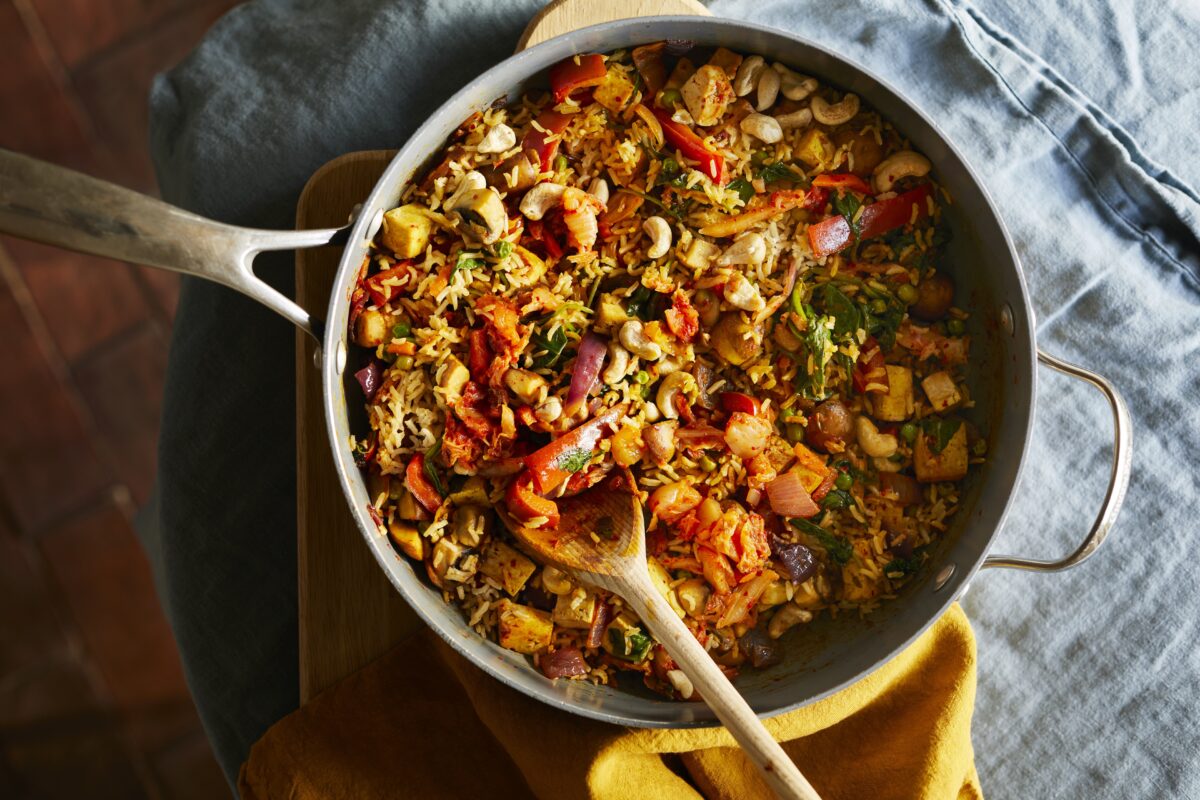
Pro-Tip: Preserving Probiotics and Texture
One of the most common mistakes in gut-friendly cooking is over-applying heat. Probiotics are living organisms; they are sensitive to high temperatures. To maximize the health benefits, treat your kimchi like a fresh garnish rather than a cooking vegetable. By adding the bulk of your kimchi after the heat is turned off, you ensure the live cultures remain active.
If you crave that crispy, charred texture without using excess oil, I highly recommend using a well-seasoned cast-iron skillet. It retains heat more effectively than non-stick pans, allowing the rice to develop a crust (known as "nurungji" in Korean) using only a tiny amount of toasted sesame oil for flavor.
FAQ
Is kimchi fried rice good for weight loss?
Yes, especially when made with fiber-rich brown rice and plenty of vegetables. The high fiber content promotes satiety, while the probiotics in kimchi have been linked to improved metabolic health and a lower risk of obesity. By using plant-based proteins and minimizing oil, you create a nutrient-dense, lower-calorie meal.
How can I make kimchi fried rice healthier?
You can make it healthier by replacing white rice with whole grains like brown rice or quinoa to increase fiber. Adding a variety of colorful vegetables increases the micronutrient profile, and adding the kimchi at the end of the cooking process preserves the beneficial probiotics. Using low-sodium tamari instead of soy sauce also helps reduce overall salt intake.
What is the best rice substitute for healthy kimchi fried rice?
The best rice substitute is cauliflower rice for a low-carb option, or sprouted brown rice for maximum nutrition. If you want to maintain the traditional texture while boosting gut health, use cooled leftover brown rice, which is high in resistant starch that feeds beneficial gut bacteria.
Does cooking kimchi remove its health benefits?
High heat can kill the live probiotics found in kimchi. While you still benefit from the fiber and vitamins after cooking, the live bacterial cultures are lost. To preserve these benefits, it is best to stir in the majority of your kimchi at the very end of the cooking process once the pan is removed from the heat.
How do I reduce the sodium in kimchi fried rice?
To reduce sodium, use liquid aminos or low-sodium tamari instead of standard soy sauce. You can also increase the amount of fresh aromatics like ginger, garlic, and scallions to provide flavor without the need for excess salt. Rinsing your kimchi slightly can also help, though you may lose some of the fermented flavor.
What protein goes best with healthy kimchi fried rice?
Super-firm tofu or tempeh are excellent plant-based choices as they absorb the flavors of the kimchi and gochujang well. If you prefer animal protein, poached eggs or steamed shrimp are lean options that complement the fermented notes of the dish without adding excessive saturated fat.
Ready to Boost Your Gut Health?
Mastering the art of healthy kimchi fried rice is a gateway to more creative, microbiome-focused cooking. Don't be afraid to experiment with whatever is in season; adding roasted cauliflower, radishes, or even kale can further diversify the plant-based nutrition your gut microbes crave.
Remember, the goal is not perfection but progress. Every time you choose whole grains and fermented foods, you are casting a vote for a healthier digestive system. Enjoy the process of nourishing your body from the inside out.