Quick Facts
- Prevalence: This condition affects 6% to 7% of adults over the age of 50 in the United States, and the risk increases to more than 20% in populations older than 70 years.
- Core Strategy: Successful management requires a dual-track approach focusing on reducing internal venous pressure and repairing the external skin barrier.
- Safety Alert: An Ankle-Brachial Index (ABI) test is mandatory before starting any high-pressure compression therapy to ensure adequate arterial blood flow.
- Primary Cause: The root of the problem is chronic venous hypertension and venous reflux, where blood pools in the lower legs due to weakened vein valves.
- Direct Answer: Effective stasis dermatitis treatment for seniors involves reducing venous hypertension through compression therapy and leg elevation while managing skin inflammation with emollients and topical corticosteroids.
Effective stasis dermatitis treatment for seniors focuses on reducing venous hypertension and managing skin inflammation. The primary approach includes compression therapy—using graduated stockings, bandages, or hook-and-loop wraps—to improve blood flow and reduce swelling. Additionally, elevating the legs above the heart for short periods throughout the day helps alleviate pressure on the lower extremities.
Understanding the Root Cause: Beyond the Skin
When many older adults first notice redness, scaling, or itching around their ankles, their first instinct is to reach for a heavy moisturizer or an over-the-counter anti-itch cream. However, in the realm of geriatric dermatology, what looks like a simple skin rash is often a visible symptom of a deeper vascular issue. To understand stasis dermatitis treatment, we must first look at the mechanics of the circulatory system.
The condition is driven by chronic venous hypertension. As we age, the valves in our leg veins—which are responsible for pushing blood back up to the heart against the force of gravity—can become weakened or damaged. This leads to venous reflux, a state where blood flows backward and pools in the lower extremities. This increased pressure causes fluid and blood cells to leak out of the small vessels and into the surrounding skin tissue.
Over time, this process leads to distinct visual changes. One of the most common is hemosiderin staining, a brownish or rust-colored discoloration caused by the breakdown of red blood cells in the skin. If left unmanaged, the skin can become thick and fibrotic, a condition known as lipodermatosclerosis. In advanced stages, the lower leg may take on the appearance of an inverted champagne bottle, where the area just above the ankle becomes narrow and scarred while the calf remains swollen. Recognizing that the problem starts with circulation, not just the skin surface, is the first step toward effective managing stasis dermatitis in seniors.
Is It Cellulitis? Differentiating Symptoms in Seniors
One of the greatest challenges in treating older patients is the high rate of misdiagnosis. It is estimated that nearly one-third of patients with stasis dermatitis are initially misdiagnosed with cellulitis, a bacterial skin infection. This leads to the unnecessary use of antibiotics and delays the actual stasis dermatitis treatment that the patient needs.
Distinguishing between the two is vital. Cellulitis is typically unilateral, meaning it affects only one leg, and is often accompanied by systemic symptoms like fever and a high white blood cell count. In contrast, stasis dermatitis is almost always bilateral, affecting both legs simultaneously. Because the skin barrier is compromised in chronic cases, seniors are at a higher risk for secondary cellulitis, making it even more important to monitor for signs of infected stasis dermatitis in elderly patients.
| Feature | Stasis Dermatitis | Cellulitis |
|---|---|---|
| Symmetry | Usually bilateral (both legs) | Usually unilateral (one leg) |
| Pain Level | Itchy or achy | Tender and painful to the touch |
| Temperature | Mildly warm or normal | Significantly hot to the touch |
| Fever | Absent | Often present |
| Onset | Gradual, chronic | Rapid, acute |
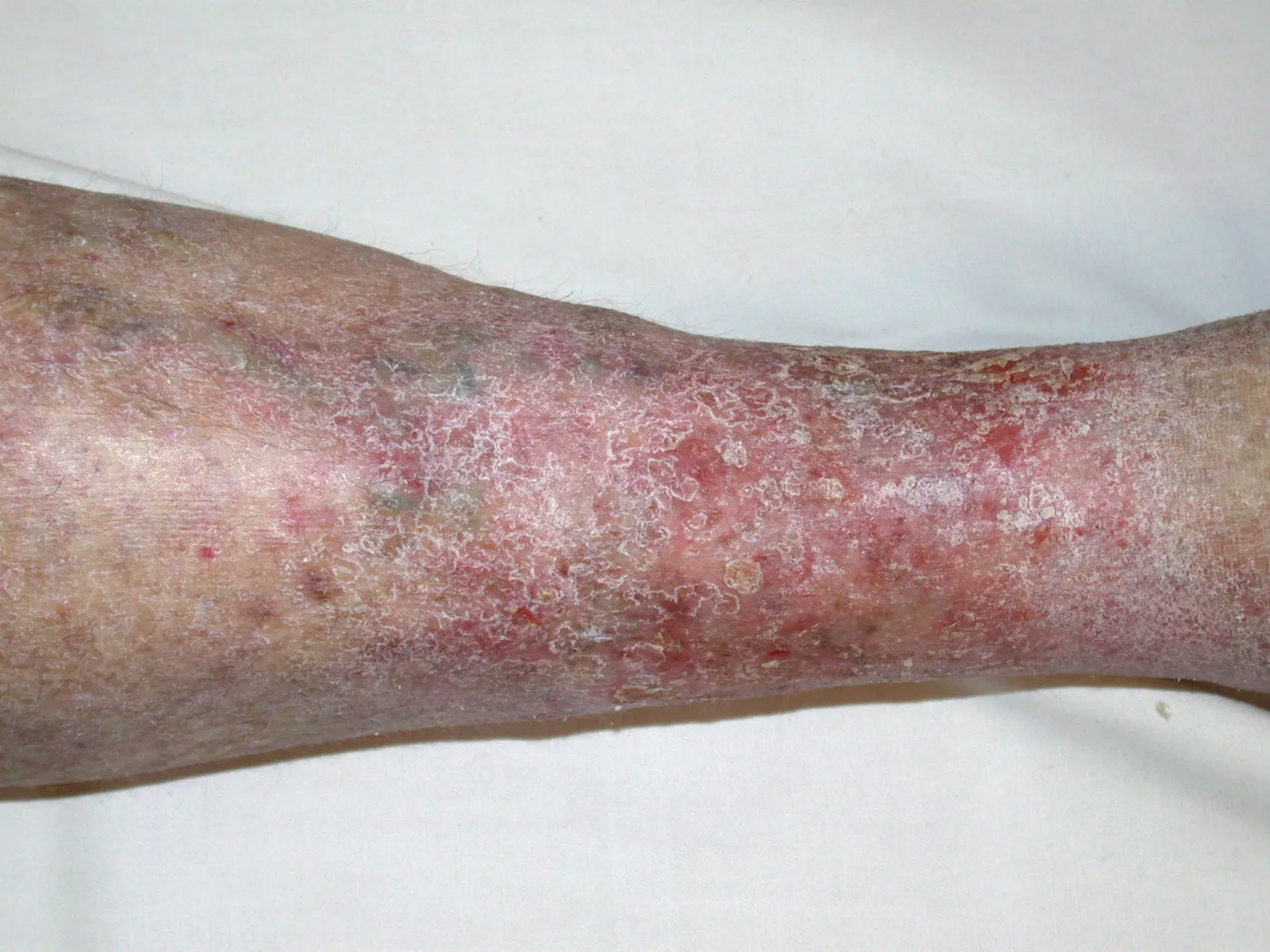
If you notice increasing pain, spreading redness that feels hot, or a sudden fever, you should consult vascular specialists immediately to rule out an infection.
The Cornerstone: Compression and Elevation
The most critical element of any stasis dermatitis treatment plan is addressing the underlying fluid buildup. This is achieved through a combination of compression therapy for stasis dermatitis and strategic limb positioning.
Compression works by applying external pressure to the limb, which supports the vein walls and helps the valves function more efficiently. However, choosing the right tool is essential. While high-pressure medical-grade stockings (30-40 mmHg) are highly effective, they can be difficult for seniors to put on. Depending on the severity of the swelling, a healthcare provider might recommend a progression from multi-layer bandages to graduated compression stockings.
Despite its efficacy, research shows that only 50% to 60% of patients consistently adhere to compression protocols. To improve success, focus on these home-care strategies for how to reduce leg swelling for seniors at home:
- Elevation: Aim to elevate the legs above the heart level for 30 minutes, three to four times a day. This uses gravity to help drain fluid away from the ankles.
- The ABI Test: Before starting compression, ensure your doctor performs an Ankle-Brachial Index test. If a patient has undiagnosed peripheral artery disease, high-pressure compression can actually cut off circulation.
- Gradual Integration: If 30-40 mmHg is too uncomfortable, start with 20-30 mmHg to build tolerance.
Comparing compression stockings vs bandages for stasis dermatitis often comes down to the stage of the disease. Bandages are excellent for "decongesting" a very swollen leg, while stockings are better for long-term maintenance once the swelling is under control.
Skin Barrier Repair: Safely Managing Inflammation
While compression handles the internal pressure, a dedicated stasis dermatitis skin care routine is necessary to heal the outer layers of the skin. Senior skin is naturally thinner and more prone to irritation, making it highly sensitive to common topical ingredients.
The goal of stasis dermatitis treatment for sensitive senior skin is to restore the skin barrier function without introducing new irritants. Many patients develop allergic contact dermatitis because they use products containing common sensitizers. When selecting creams and cleansers, you must be vigilant.
Ingredients to Avoid:
- Neomycin and Bacitracin (common in over-the-counter antibiotic ointments)
- Fragrances and perfumes
- Lanolin (wool wax alcohol)
- Parabens and certain preservatives like formaldehyde releasers
For active flares, physicians often prescribe topical corticosteroids to provide pruritus relief and reduce redness. Once the acute inflammation subsides, the focus shifts to moisture retention. The best emollients for stasis dermatitis skin care are thick, greasy ointments rather than thin lotions. White petrolatum (Vaseline) is often the "gold standard" because it is hypoallergenic, inexpensive, and provides a powerful seal to prevent water loss.
Solutions for Caregivers: Managing Dexterity Issues
For many older adults, the biggest hurdle to successful stasis dermatitis treatment isn't the science—it's the application. Traditional compression stockings require significant grip strength and flexibility to pull over the heel, which is a major barrier for those with arthritis or limited mobility.
When managing stasis dermatitis in seniors, caregivers should look for adaptive tools and alternative garments. One of the most effective solutions is the use of hook-and-loop wraps. These inelastic compression devices function like a series of Velcro straps. They are significantly easier for those applying compression wraps with limited manual dexterity because they can be put on while sitting and adjusted as the swelling goes down throughout the day.
Consistency is more important than perfection. If a senior finds a particular stocking impossible to wear, it is better to switch to a lower-pressure wrap that they will actually use than to have an expensive medical garment sitting in a drawer. Education for the patient and caregiver on the "why" behind the treatment can also boost long-term adherence, ensuring the skin remains stable and ulcers are prevented.
FAQ
What is the fastest way to heal stasis dermatitis?
The fastest approach involves a combination of consistent compression therapy for stasis dermatitis and high-elevation of the limbs. Reducing the fluid buildup (edema) allows the skin to begin the healing process. Using a mid-strength topical steroid under a healthcare provider's guidance can also quickly reduce the initial inflammation and itching.
Can stasis dermatitis be cured permanently?
Because the underlying cause is often chronic venous hypertension related to aging or past vein damage, it is usually managed rather than "cured" in the traditional sense. However, with consistent lifestyle changes, proper skincare, and long-term use of compression, the symptoms can be kept in remission, and the skin can appear and feel healthy.
How do you manage stasis dermatitis at home?
Management at home centers on three pillars: daily leg elevation above the heart, the consistent use of prescribed compression garments, and a "less is more" skincare routine using fragrance-free emollients. Avoiding long periods of standing or sitting is also helpful to prevent blood from pooling in the lower legs.
What is the best cream for stasis dermatitis?
The best emollients for stasis dermatitis skin care are thick, bland ointments like white petrolatum. These products are preferred over lotions because they contain fewer preservatives and provide a better barrier for sensitive skin. For itching, a doctor may prescribe a specific corticosteroid cream, but these should not be used long-term without medical supervision.
Is walking good for stasis dermatitis?
Yes, walking is generally very beneficial. The "calf muscle pump" is a vital mechanism that helps push venous blood back toward the heart. Regular, gentle walking while wearing compression garments can improve circulation and reduce the symptoms of chronic venous hypertension.
Seeking Professional Guidance
If you or a loved one are struggling with persistent leg swelling and skin changes, the most important step is obtaining an accurate diagnosis. A consultation with vascular specialists can provide clarity through diagnostic tools like venous ultrasound and ABI testing. Proactive care is the best way to prevent the progression of this condition into more serious complications like venous ulcers or systemic infections.