Quick Facts
- Condition: Staphylococcal Scalded Skin Syndrome (SSSS), also known as Ritter disease.
- Primary Marker: Positive Nikolsky sign, where skin peels away when rubbed with gentle pressure.
- Urgency: The timeline from first signs to widespread blistering is very fast, typically occurring within 24 to 48 hours.
- Main Cause: This condition is triggered by exfoliative toxins produced by certain strains of Staphylococcus aureus bacteria.
- Target Group: It most commonly affects children under five years old, especially newborns.
- Recovery: With the right antibiotic treatment, most children achieve a full recovery in about two weeks.
Scalded skin syndrome (SSSS) is a serious skin condition triggered by bacteria. Early symptoms often include fever and widespread redness, requiring urgent medical management. The condition involves a primary infection that releases toxins into the bloodstream, causing the top layer of skin to detach and peel in large sheets. Because of the risk of dehydration and secondary infection, immediate hospital care is essential for stabilization and recovery.
Recognizing Early Symptoms of Scalded Skin Syndrome in Children
For parents and caregivers, the early stages of this condition can be confusing because they often mimic a common viral illness or a mild skin irritation. However, the progression is uniquely rapid. Understanding the timeline of recognizing early symptoms of scalded skin syndrome in children is critical for getting help before the skin becomes severely compromised.
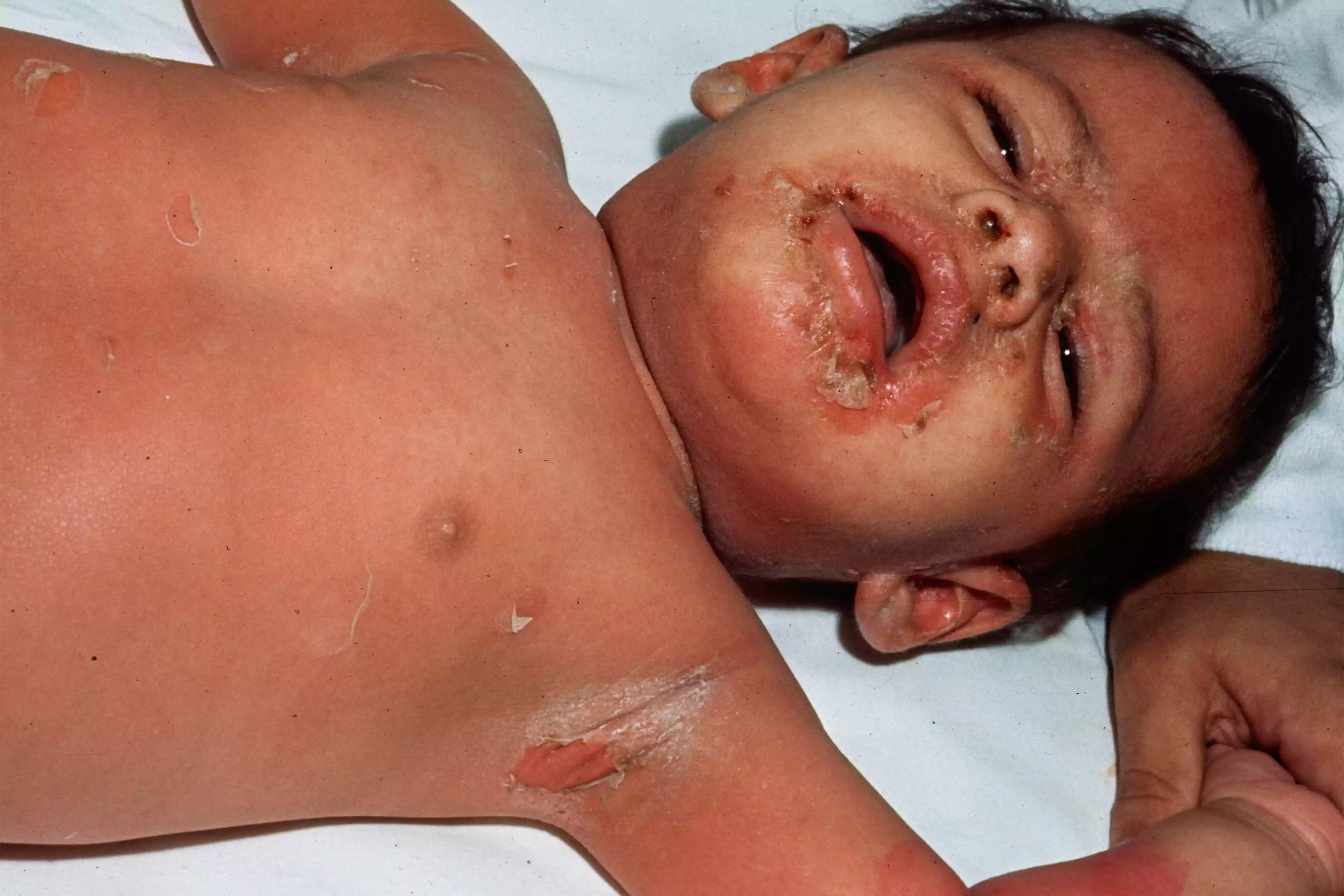
In the first 24 hours (Phase 1), the child usually develops a high fever and becomes extremely irritable. A hallmark of this stage is extreme skin tenderness; the child may cry out in pain if touched or picked up, even if the skin looks normal. Within 24 to 48 hours (Phase 2), a widespread erythema, or deep redness, begins to cover the body. This redness typically starts on the face or in the skin folds, such as the armpits, groin, and neck.
As the condition advances, you may notice periorificial crusting, which refers to a dry, flaky crust forming around the mouth, nose, or eyes. This is followed by the appearance of large, fragile, fluid-filled blisters. These blisters are so thin that they rupture almost immediately, leading to desquamation, where the skin begins to peel off in large, moist sheets.
One of the most distinctive clinical indicators used by doctors is the Nikolsky sign. Medical professionals may check for this by applying gentle, sliding pressure to the skin. Knowing how to test for a positive nikolsky sign is a specialized skill: if the top layer of skin slips away from the lower layer with even minor friction, it confirms that the toxins are actively breaking down the skin's structural integrity.
The Science: Why Exfoliative Toxins Target the Skin
The root of this condition is the Staphylococcus aureus bacteria, specifically strains belonging to phage group II. These bacteria don't necessarily need to be all over the skin to cause widespread damage. Instead, they produce specific poisons called exfoliative toxins A and B. These toxins travel through the blood and act like molecular scissors, specifically targeting a protein called desmoglein-1 (Dsg1).
Desmoglein-1 is the "glue" that holds skin cells together in the upper epidermis. When the toxins cleave this protein, the cells lose their grip on one another, causing the skin to separate and blister. Children are at a much higher risk for this because their kidneys are not yet mature enough to filter out these toxins efficiently. Furthermore, managing staphylococcal scalded skin syndrome in newborns is particularly challenging because infants have lower levels of protective antibodies against these specific toxins.
While the condition is primarily pediatric, it can occur in adults, where the stakes are significantly higher. The mortality rate of Staphylococcal Scalded Skin Syndrome is less than 5% in children but increases to between 40% and 63% in adults. This dramatic difference is usually because adults who contract the disease often have underlying health issues, such as renal failure or a suppressed immune system, which prevents the body from clearing the toxins. In the United States, the annual incidence of Staphylococcal Scalded Skin Syndrome is estimated at 7.67 cases per million children, with a significantly higher rate of 45.1 cases per million among infants under two years of age.
Diagnosis and Differential Comparison
Diagnosing scalded skin syndrome is primarily a clinical process, meaning doctors identify it based on the physical appearance and the speed of the symptoms. They will look for a primary infection site, such as a recent ear infection, a sore throat, or an infected umbilical stump in newborns. While a skin biopsy can confirm the diagnosis by showing where the skin layers are separating, it is often not necessary if the clinical signs are clear.
It is vital for healthcare providers to distinguish SSSS from other severe skin reactions like Stevens-Johnson Syndrome (SJS) or Toxic Epidermal Necrolysis (TEN). Making an accurate differential diagnosis is the first step toward the correct treatment.
| Feature | Scalded Skin Syndrome (SSSS) | SJS / TEN |
|---|---|---|
| Primary Cause | Bacterial toxins (Staph) | Severe drug reaction |
| Skin Layer | Superficial (upper epidermis) | Deep (full-thickness epidermis) |
| Mucous Membranes | Rarely affected (mouth/eyes clear) | Severely affected (painful sores) |
| Target Group | Mostly infants and young children | Any age group |
| Healing | Usually heals without scarring | Often results in permanent scarring |
The most significant differentiator is the involvement of mucous membranes. In SSSS, the linings of the mouth, eyes, and throat are almost always spared, whereas, in SJS and TEN, these areas are severely impacted by painful ulcers.
Staphylococcal Scalded Skin Syndrome Management
Once a diagnosis is made, Staphylococcal scalded skin syndrome management requires immediate hospitalization. Because the skin acts as the body’s primary barrier against fluid loss and germs, losing large sections of it is a medical emergency. Children are often admitted to a neonatal intensive care unit (NICU) or a specialized burn unit to receive the highest level of care.
The first line of defense is antibiotic treatment for staphylococcal scalded skin syndrome. Doctors typically use penicillinase-resistant antibiotics, such as Nafcillin or Oxacillin, which are designed to kill the specific strains of Staph that produce these toxins. If the infection is suspected to be MRSA (methicillin-resistant Staphylococcus aureus), different medications like Vancomycin may be used.
Beyond fighting the bacteria, supportive wound care for scalded skin syndrome recovery is a major focus of the hospital stay. This includes:
- Fluid Resuscitation: Because the raw, exposed dermis loses moisture rapidly, intravenous fluids are given to prevent dehydration and correct any electrolyte imbalance.
- Pain Management: The exposed skin is incredibly painful, requiring regular doses of analgesics to keep the child comfortable.
- Skin Protection: Nurses apply emollients and use non-adherent dressings to protect the raw areas. It is important to handle the patient as little as possible to prevent further skin shearing.
- Secondary Infection Prevention: The raw skin is a magnet for other bacteria, so the environment must be kept extremely sterile.
Recovery and Preventing SSSS Infection Spread
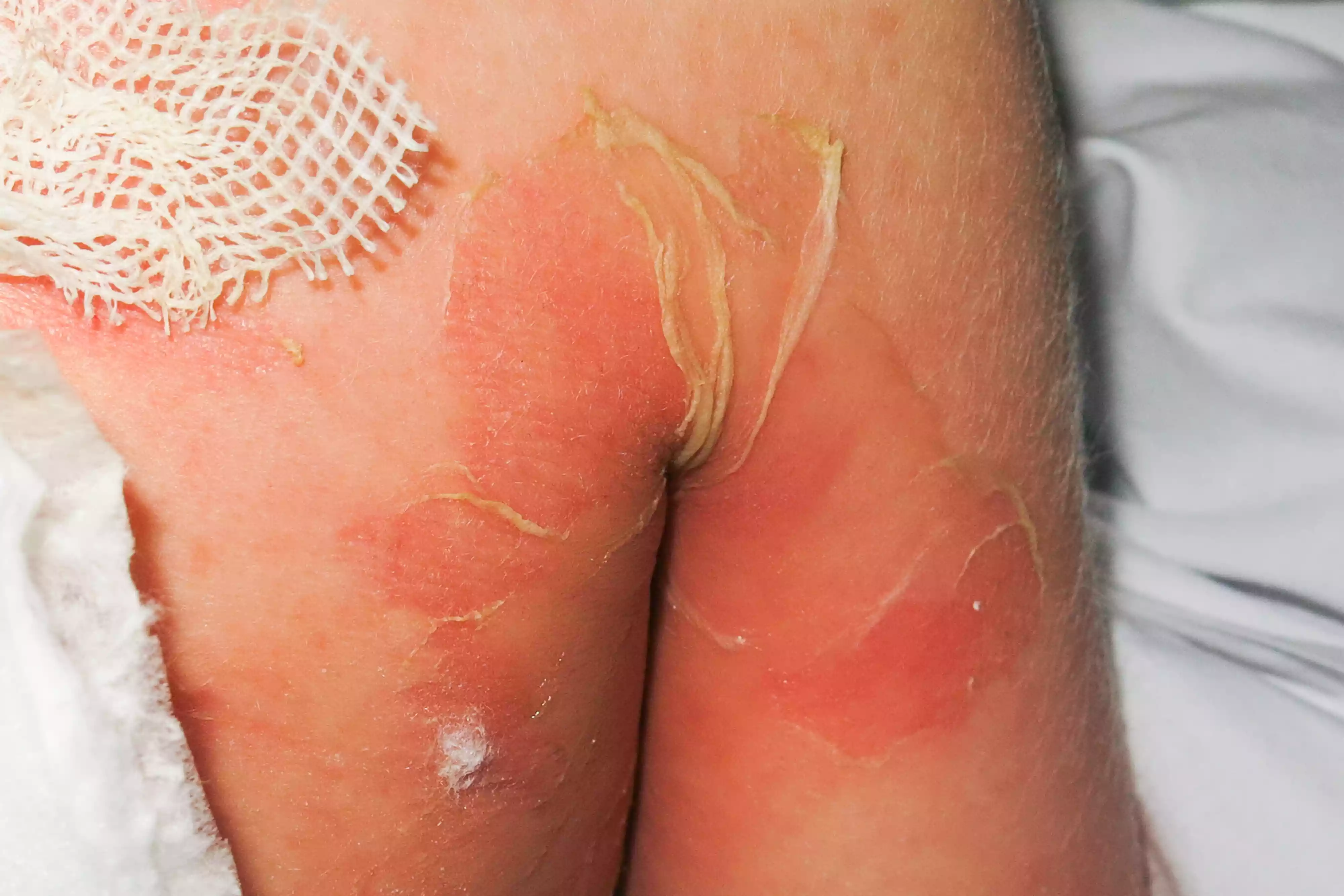
The good news for parents is that with prompt intervention, the prognosis for children is excellent. Because the toxin only affects the very top layer of the epidermis, the skin usually regenerates without any permanent scarring. Most pediatric patients achieve a full recovery within approximately two weeks. During the healing phase, the skin may look dry or flaky as the new layers mature, but this is a normal part of the process.
After leaving the hospital, preventing SSSS infection spread in the home is a priority. While the peeling skin itself is not usually contagious, the Staphylococcus aureus bacteria that caused the initial infection are.
To help with preventing the spread of staphylococcal skin infections at home, families should adhere to strict hygiene protocols. This includes frequent handwashing with soap and water, especially after touching any skin lesions or changing bandages. It is also vital to avoid the sharing of towels, bedding, or personal items like razors or washcloths. Keeping any small cuts, scrapes, or primary infection sites (like the site of a recent ear infection) clean and covered can stop the bacteria from colonizing and potentially causing a recurrence or spreading to other family members.
If you notice any new signs of redness, swelling, or pus around the healing areas, contact your healthcare provider immediately. These could be signs of a secondary bacterial infection that requires additional care.
FAQ
What causes staphylococcal scalded skin syndrome?
The condition is caused by a specific type of Staphylococcus aureus bacteria that releases exfoliative toxins. These toxins travel through the bloodstream and attack the proteins that hold the top layers of skin cells together, causing them to separate and peel.
What are the early symptoms of scalded skin syndrome?
Early signs usually include a high fever, irritability, and extreme skin tenderness. Within 24 to 48 hours, this is followed by a widespread red rash, painful blisters, and skin that peels off in large sheets, appearing much like a burn.
Is scalded skin syndrome contagious to others?
The syndrome itself is a reaction to a toxin and is not contagious. However, the Staphylococcus aureus bacteria that produce the toxin can be passed from person to person through direct contact or shared items like towels and bedding.
How is scalded skin syndrome treated?
Treatment requires hospitalization for intravenous penicillinase-resistant antibiotics to kill the bacteria. Patients also receive supportive care, including fluid resuscitation to prevent dehydration, pain management, and specialized wound care using protective dressings.
How long does it take for scalded skin syndrome to heal?
With appropriate medical treatment, most children begin to show improvement within a few days. The skin typically finishes peeling and heals completely within about 10 to 14 days, usually without any permanent scarring.
What is the difference between SSSS and Stevens-Johnson syndrome?
The main difference is the cause and the area affected. SSSS is caused by bacterial toxins and usually spares the mucous membranes (mouth and eyes). Stevens-Johnson syndrome is typically a reaction to medication, affects deeper layers of the skin, and involves severe sores in the mouth and eyes.