Quick Facts
- Best for Endurance: Beetroot juice provides high levels of dietary nitrates that improve blood flow.
- Best for Recovery: Tart cherry juice contains concentrated anthocyanins that target muscle inflammation.
- Performance Boost: Research shows a 1% to 3% improvement in exercise efficiency with nitrate supplementation.
- Recovery Speed: Athletes using tart cherry juice can return to full strength 24% faster than those using a placebo.
- Timing Strategy: Beet juice is an acute supplement taken 2-3 hours before training; tart cherry juice works best through a chronic loading phase.
- Nutritional Mechanism: Nitrates drive vasodilation and nitric oxide production while polyphenols manage oxidative stress.
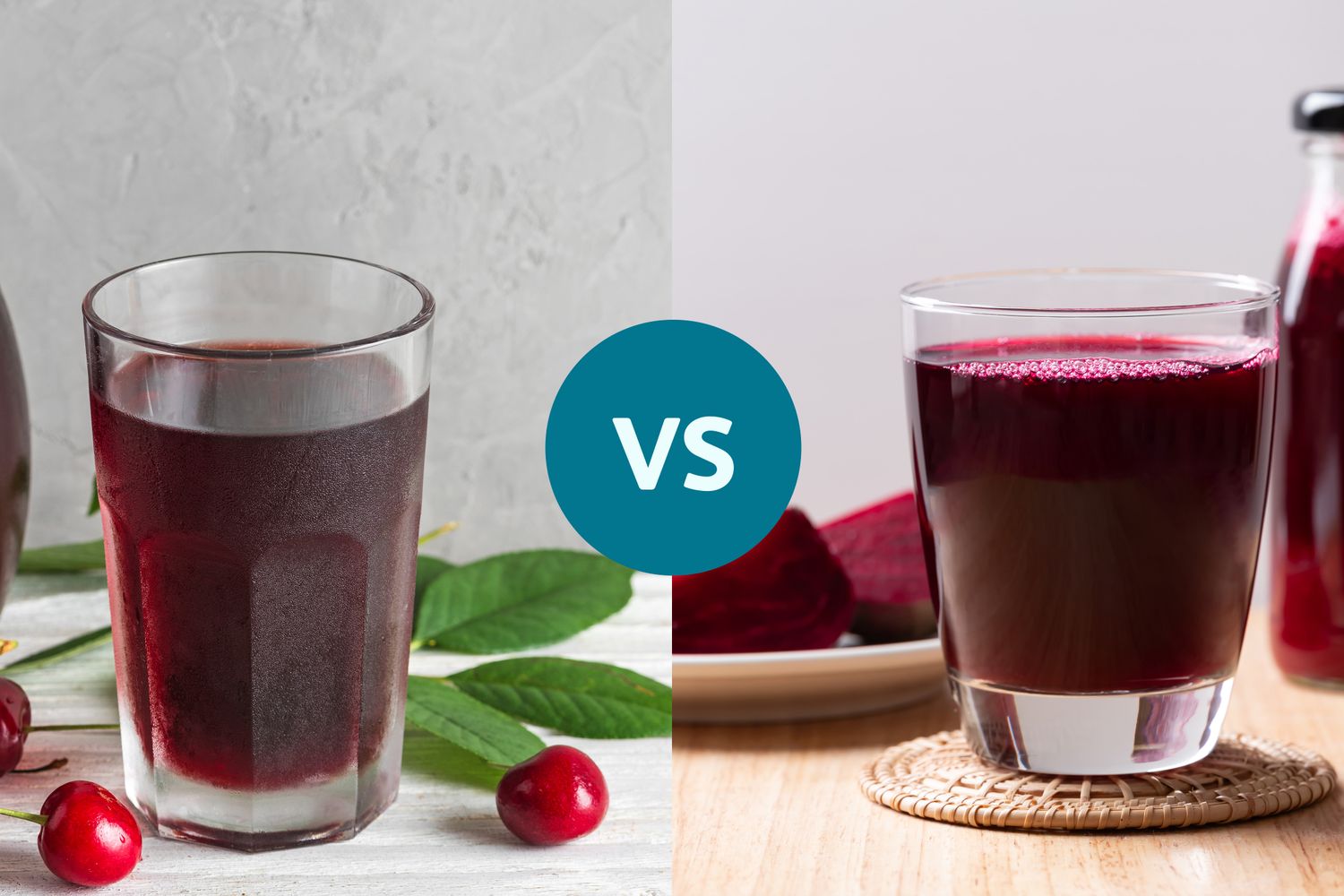
Tart cherry juice and beet juice serve distinct roles in an athletic protocol: beet juice acts as an ergogenic aid to boost stamina and performance, while tart cherry juice serves as a recovery powerhouse to mitigate post-exercise inflammation and muscle damage. When evaluating tart cherry juice vs beet juice for muscle recovery, it is essential to understand that while both offer health benefits, their physiological pathways are different. Beet juice is primarily utilized to enhance the delivery of oxygen to working muscles, whereas tart cherry juice is leveraged to speed up the repair process following intensive training sessions.
The Science of Stamina: Beet Juice and Nitrates
The primary benefit of beetroot juice for exercise performance and recovery lies in its high concentration of dietary nitrates. Once consumed, these nitrates are converted into nitric oxide in the body. This molecule is a potent signaling agent that triggers vasodilation, which is the widening of blood vessels. For an athlete, this means enhanced blood oxygenation and more efficient nutrient delivery to the muscles currently under stress.
By improving the efficiency of the mitochondria—the powerhouses of your cells—nitrates allow the body to perform the same amount of work while consuming less oxygen. Clinical studies on endurance athletes show that consuming beet juice two to three hours before exercise can improve performance by 1% to 3% because the dietary nitrates reduce the body's oxygen demand during physical activity. This is particularly beneficial for runners, cyclists, and triathletes who operate at a high percentage of their VO2 max for extended periods.
To reach the therapeutic threshold, sports scientists generally recommend a dose of approximately 400mg to 800mg of dietary nitrates. This typically equates to about 500ml of standard beet juice or a more concentrated 70ml shot. Using these ergogenic aids can significantly delay exercise-induced fatigue, allowing athletes to maintain a higher intensity for a longer duration. While beet juice does have some antioxidant properties, its role in a performance stack is firmly rooted in the "pre-workout" phase to drive stamina rather than the "post-workout" phase to fix damage.
The Recovery Powerhouse: Tart Cherry and Anthocyanins
While beet juice focuses on the "go," tart cherry juice focuses on the "repair." Specifically, Montmorency cherries are the gold standard in sports nutrition due to their incredibly high concentration of polyphenols and anthocyanins. These compounds are powerful antioxidants that specifically target the chemical pathways responsible for muscle damage markers such as IL-6 and Creatine Kinase.
Unlike standard sweet cherries, the tart variety works to blunt the inflammatory response that follows heavy eccentric loading—the type of training that causes the most soreness. Research indicates that athletes who consume tart cherry juice for eight days surrounding intensive training sessions can recover their muscular strength 24% faster than those in a control group. This makes it an indispensable tool for tournament-style competitions or high-volume training blocks where back-to-back performance is required.
The benefits of tart cherry juice for muscle recovery extend beyond just strength. Clinical investigations have found that athletes drinking tart cherry juice experienced a 12% reduction in muscle pain following exercise compared to those consuming a placebo. By managing oxidative stress and reducing the severity of delayed onset muscle soreness (DOMS), tart cherry juice allows for a faster return to high-intensity training.
Timing and Dosage: When to Take Each for Best Results
Understanding when to take tart cherry juice vs beet juice for best results is the difference between a wasted supplement and a new personal record. These two substances require different metabolic windows to be effective.
For beet juice, the protocol is acute. Nitric oxide levels in the blood peak approximately two to three hours after ingestion. Therefore, you should consume your beet juice or nitrate supplement in that specific window before your starting gun or first set. Some elite athletes also prefer a "loading" phase of beet juice for three days leading up to a major race to fully saturate the tissues, though the pre-workout dose remains the most critical.
Tart cherry juice requires a chronic approach. It is not a "one-off" supplement. To effectively manage post-exercise inflammation, you should follow a loading phase.
Pro-Tip: The Tart Cherry Loading Protocol To maximize the anti-inflammatory effects, consume 30ml of tart cherry juice concentrate (equivalent to about 90-100 whole cherries) twice daily for five days leading up to a major event, on the day of the event, and for 48 hours afterward.
When comparing tart cherry juice concentrate vs beet root powder for athletes, convenience often dictates the choice. Concentrates and powders are easier to transport and typically contain a more standardized dose of the active compounds than raw juice.
Can You Mix Them? Creating the Ultimate Recovery Stack
The question often arises: why choose between beet juice for endurance vs tart cherry for inflammation when you could have both? Combining these two can create a comprehensive strategy that covers the entire exercise timeline. The nitrates vs antioxidants for muscle soreness relief debate is resolved when you realize they are synergistic, not competitive.
Mixing tart cherry and beet juice together can provide the nitric oxide-driven stamina required for the workout while simultaneously prepping the body to handle the resulting oxidative stress. However, there are a few practical considerations:
- Digestive Sensitivity: Both juices are high in natural sugars and can be acidic. Beet juice, in particular, is known to cause gastrointestinal distress in some athletes. It is vital to test this mixture during training before using it on race day.
- Flavor Profile: Beet juice has a very "earthy" taste that some find unappealing. The sharp acidity of tart cherry juice can actually help mask the earthiness of the beet, making the mixture more palatable.
- Glycogen Replenishment: While these juices provide micronutrients, they are not a complete recovery solution. Athletes must still ensure proper intake of carbohydrates and protein alongside these supplements to optimize overall metabolic recovery.
For those looking for a high-quality product, always look for the Informed-Sport or NSF Certified for Sport logo. This ensures the product has been tested for banned substances and that the concentration of active ingredients like anthocyanins and nitrates is accurate.
FAQ
What are the main differences between tart cherry juice and beet juice?
The primary difference lies in their active compounds and goals. Beet juice contains nitrates that convert to nitric oxide, which improves blood flow and oxygen efficiency during exercise. Tart cherry juice is rich in anthocyanins and polyphenols, which are antioxidants that reduce inflammation and muscle damage markers after exercise. Essentially, beet juice is for stamina, and tart cherry juice is for recovery.
Is it better to drink tart cherry juice or beet juice for muscle recovery?
For pure recovery from muscle soreness and strength loss, tart cherry juice is the superior choice. It specifically targets oxidative stress and inflammation, helping athletes recover strength 24% faster. While beet juice helps with blood flow, it does not have the same focused impact on reducing muscle damage markers like IL-6 and Creatine Kinase that tart cherry does.
Can you mix tart cherry juice and beet juice together?
Yes, you can mix them to create a comprehensive performance and recovery drink. This combination allows you to benefit from the endurance-boosting effects of nitrates and the recovery-enhancing effects of antioxidants simultaneously. Just be mindful of the total sugar content and your personal digestive tolerance for the mixture.
Should I drink tart cherry juice or beet juice before a workout?
Beet juice is most effective when taken two to three hours before a workout to maximize nitric oxide levels. Tart cherry juice can be taken before a workout as part of a multi-day loading phase, but its primary purpose is to protect against damage that occurs during and after the session, so consistency over several days is more important than the specific pre-workout timing.
What are the benefits of taking tart cherry juice versus beet juice for inflammation?
Tart cherry juice is significantly more effective for inflammation. It contains high levels of polyphenols that inhibit inflammatory enzymes in a way similar to some over-the-counter anti-inflammatory medications. Beet juice is primarily a vasodilator and while it has some general health benefits, it is not considered a potent anti-inflammatory tool for sports recovery in the same way tart cherry is.