Quick Facts
- Prep Time: 10 minutes (no-bake)
- Protein Content: 15–25g per serving recommendation for optimal recovery
- Primary Base: Millet flakes and almond flour (100% date-free)
- Electrolyte Profile: Enhanced with flaky sea salt for sodium replenishment
- Shelf Life: 5 days in the refrigerator or 3 months in the freezer
- Glycemic Impact: Low-to-moderate, designed for sustained energy release
Looking for a high-performance snack without the sugar crash? These salted cookie dough protein balls are a game-changer for your post-workout routine. Unlike traditional recipes, these are date-free energy ball recipes that utilize millet flakes for a unique texture and sustained energy. These date-free cookie dough protein balls use millet flakes and ground almonds as a base instead of dried fruit, providing a chewy texture and a balanced macronutrient profile suitable for those monitoring their glycemic index.
The Science of Recovery: Why These Energy Bites Work
In the world of sports nutrition, the window of opportunity following a training session is critical. To maximize the work you put in at the gym, your body requires specific inputs to transition from a catabolic state (breaking down muscle) to an anabolic state (building it up). Research indicates that consuming between 15 and 25 grams of protein within two hours after exercise is recommended to optimally stimulate muscle growth and repair. These cookie dough protein balls are designed to meet that threshold efficiently while remaining highly portable.
Protein alone is only half the story. During intense physical activity, your body loses more than just water. Individuals lose an average of 0.5 to 1.3 grams of sodium per liter of sweat, making salt replenishment crucial for restoring electrolyte balance and preventing muscle cramps. By incorporating flaky sea salt into these healthy post-workout protein bites, we address both muscle protein synthesis and systemic rehydration.
Furthermore, total daily intake is the foundation of any athletic physique. Most active adults require a daily protein intake of 1.2 to 2.0 grams per kilogram of body weight to support the repair and remodeling of skeletal muscle tissues. Using a supplement like whey protein isolate or a high-quality pea protein in your snack recipes ensures you are getting the essential amino acids necessary to hit these aggressive targets without the digestive heaviness of a full meal.
Functional Ingredients: Beyond the Standard Date-Based Ball
Most commercial energy bites rely on dates as a binder. While dates provide quick glucose, they can cause a significant insulin spike that many athletes prefer to avoid, especially during lower-intensity training phases. This recipe shifts the paradigm by using millet flake snack recipes as a structural foundation. Millet is an ancient grain that offers a satisfying crunch and a complex carbohydrate profile, ensuring satiety and steady blood sugar levels.
The fat source is equally important for performance and hormone health. We utilize cashew butter for its creamy consistency and high concentration of monounsaturated fats. When combined with cacao nibs, you get a snack rich in antioxidants and magnesium, which supports muscle relaxation.
Choosing the best plant based protein powder for energy bites is a matter of texture and solubility. If you prefer a dairy-free option, look for a blend of pea and brown rice protein to ensure a complete amino acid profile. If dairy is not a concern, a vanilla-flavored whey protein isolate provides excellent bioavailability and blends seamlessly with the salted chocolate chip protein bites with cashew butter to create a legitimate cookie dough flavor.
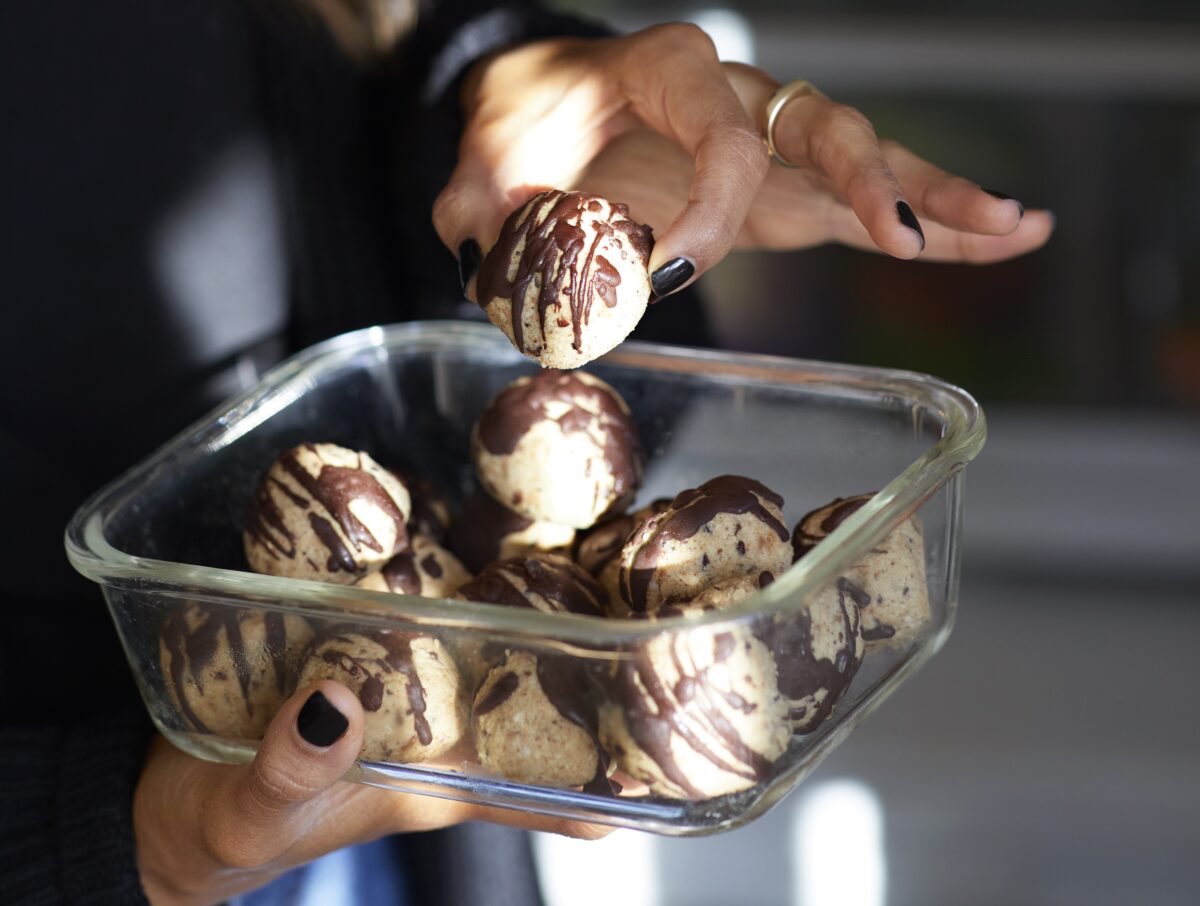
Step-by-Step Instructions & Pro Prep Hacks
Creating no bake date free cookie dough protein balls is a straightforward process, but the execution determines the final texture. Follow these steps to ensure your millet flake protein energy balls for athletes turn out professional-grade every time.
- Combine the Dry Base: In a large mixing bowl, whisk together the millet flakes, ground almonds, and your choice of protein powder. Ensure there are no large clumps of protein, as this can create dry pockets in the finished ball.
- Incorporate the Binders: Add the cashew butter and a small amount of natural sweeteners like maple syrup or stevia drops. If the mixture feels too dry, this is the time to add a teaspoon of water.
- Fold in the Texture: Gently fold in the cacao nibs and a generous pinch of flaky sea salt. The salt should be distributed unevenly to provide occasional bursts of flavor that contrast with the sweetness of the dough.
- The Professional Rolling Hack: The most common complaint when making protein bites is the dough sticking to the hands. To solve this, grease your hands with a small amount of coconut oil. This creates a non-stick barrier, allowing you to roll perfectly smooth spheres without losing half the dough to your skin.
- Setting the Shape: Place the rolled balls on a parchment-lined tray and move them to the freezer immediately.
Texture Mastery: Troubleshooting & Storage Guide
Achieving the perfect cookie-dough consistency requires a balance between moisture and solids. Because different protein powders have varying levels of absorbency, you may need to adjust the recipe on the fly. If you find yourself wondering how to fix crumbly protein ball dough, the solution is usually a matter of adding healthy fats or minimal moisture.
| Issue | Cause | Solution |
|---|---|---|
| Crumbly or falling apart | Too much dry powder or old nut butter | Add 1 tsp of water or extra nut butter until it sticks. |
| Too sticky to roll | Excessive liquid sweetener or oils | Add a tablespoon of millet flakes or almond flour. |
| Gritty texture | Protein powder didn't hydrate | Let the dough sit for 10 minutes before rolling. |
| Lack of flavor | Insufficient salt or low-quality protein | Increase the flaky sea salt or use a more robust vanilla extract. |
Proper storage is the final step in post workout protein bites for muscle recovery. Homemade protein bites are best stored in the freezer for 30 minutes to set, after which they can be kept in an airtight container in the refrigerator for up to five days. This storage method maintains their chewy texture and ensures the healthy fats and amino acids remain fresh for post-workout muscle recovery. For long-term prep, you can keep them in the freezer for up to three months; just let them thaw for five minutes before consuming to regain that signature cookie-dough feel.
FAQ
How do you make cookie dough protein balls?
To make these snacks, you mix a base of millet flakes and almond flour with a high-quality protein powder. You then add cashew butter and a liquid binder like water or a small amount of natural sweetener. Once the mixture reaches a dough-like consistency, you fold in cacao nibs and sea salt before rolling them into bite-sized spheres and chilling them in the freezer to set.
Are protein balls actually healthy for you?
Protein balls are an excellent functional snack when they are made with whole-food ingredients and minimal refined sugars. By using a date-free approach with millet flakes and ground almonds, these bites provide a balanced macronutrient profile that supports muscle repair while maintaining stable blood sugar levels, making them a superior choice compared to processed convenience bars.
Why are my protein balls dry or crumbly?
This usually happens if the protein powder used is highly absorbent or if the nut butter was the dry, bottom-of-the-jar variety. To fix crumbly protein ball dough, gradually add a splash of water or an extra teaspoon of nut butter until the mixture reaches a cookie-dough consistency. Greasing your hands with coconut oil during the rolling process can also help keep the structure together.
How long do homemade protein balls stay fresh?
When stored correctly in an airtight container, these bites will stay fresh in the refrigerator for up to five days. This duration ensures the fats in the nut butter do not go rancid and the protein maintains its structural integrity. If you are meal prepping for a longer period, they are best kept in the freezer.
Can you freeze cookie dough protein balls?
Yes, you can freeze cookie dough protein balls for up to three months. In fact, flash-freezing them for 30 minutes immediately after rolling is a recommended step to help them set their shape. Storing homemade energy balls in the freezer is an excellent way to have a portable, cold recovery snack ready to grab on your way to the gym.