Quick Facts
- Success Rate: A consistent routine leads to a 65 percent improvement in sleep quality for those meeting activity guidelines.
- Top Modality: Pilates is ranked as the most effective method with a 91.7% success probability for better rest.
- Dose Range: Aim for 180–920 MET-minutes per week, which is roughly 150 to 260 minutes of moderate activity.
- Biological Trigger: Sleep is initiated by a 0.5–1 °C drop in core body temperature following physical exertion.
- The Buffer: Allow a window of 90 minutes to 4 hours between vigorous movement and bedtime to prevent sleep latency.
- Primary Mechanism: Physical activity increases adenosine levels and regulates the circadian rhythm to stabilize the biological clock.
To maximize sleep benefits, morning or afternoon exercise is ideal as it helps lower orexin levels and supports the natural circadian rhythm. While morning workouts can help you fall asleep faster, experts recommend avoiding vigorous activity within one hour of bedtime to allow core body temperature to cool. For those with insomnia, light to moderate exercise should ideally be completed at least four hours before sleep to ensure a smooth transition to rest. Research involving over 2,600 adults found that those who engaged in 150 minutes of moderate-to-vigorous physical activity per week experienced a 65 percent improvement in overall sleep quality.
1. Regulating Core Body Temperature for Faster Onset
One of the most profound ways exercise for sleep functions is through the manipulation of your internal thermostat. Your body follows a strict thermoregulatory cycle that dictates when you feel alert and when you feel drowsy. Under normal conditions, your core body temperature begins to drop in the late afternoon, signaling to the brain that the day is winding down. By engaging in physical activity, you artificially raise this temperature.
The magic happens during the recovery phase. As you stop moving, your body works rapidly to dissipate heat, leading to a compensatory cooling effect. This drop, typically between 0.5–1 °C, serves as a powerful biological signal to your biological clock. This rapid decline in heat mimics the natural transition the body makes before drifting off, significantly reducing sleep latency—the time it takes to go from fully awake to light sleep.
However, the timing of this spike is critical. If you exercise too close to your bedtime, your temperature remains elevated, which can keep you tossing and turning. This is why understanding exercise intensity and sleep quality is vital. High-intensity interval training (HIIT) causes a much larger thermal spike than a gentle walk, meaning you need a longer cooling buffer before your head hits the pillow.
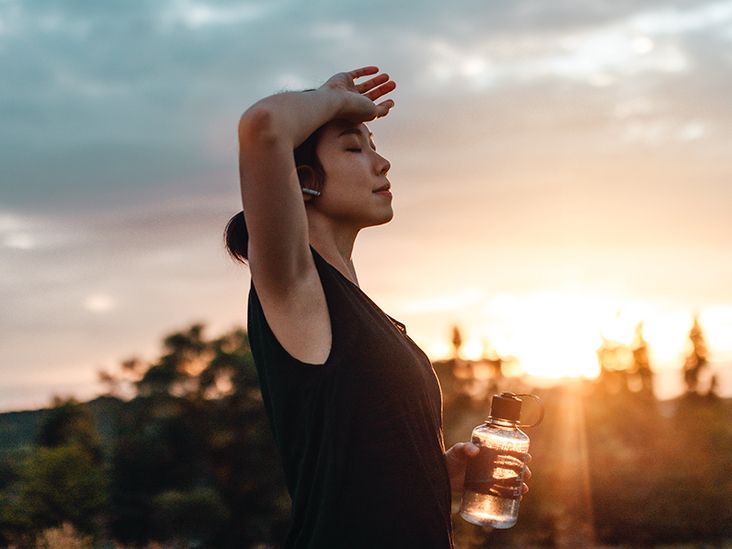
To leverage this effect, aim for moderate activity in the late afternoon. This allows the cooling phase to align perfectly with your natural wind-down period. If you are a night owl, you might find that even a short session of light movement helps "reset" a stubborn internal thermostat that usually runs too hot late into the evening.
2. Increasing Adenosine and Slow-Wave Sleep
Beyond temperature, physical exertion influences the very chemistry of your brain. Every minute you are awake, a compound called adenosine builds up in your system. Think of adenosine as a "sleep pressure" gauge. The more you move and the more energy your cells consume, the faster this gauge fills up. By the end of a physically demanding day, high levels of adenosine tell your brain that it is time to shut down and recharge.
This chemical buildup specifically targets the architecture of your rest. High sleep pressure is a primary driver for slow-wave sleep, often referred to as deep sleep. This is the most restorative phase of the night, where the body repairs tissues, strengthens the immune system, and the brain clears out metabolic waste.
If you have been searching for the best exercises to improve deep sleep duration, focus on activities that demand sustained energy output. While any movement helps, aerobic sessions that get your heart rate into a moderate zone are particularly effective at accelerating adenosine accumulation. This ensures that once you do fall asleep, you spend more time in the stages that actually leave you feeling refreshed the next morning.
According to a survey by the American Academy of Sleep Medicine, 53 percent of Americans report that regular exercise helps them achieve a better night's sleep. This isn't just a subjective feeling; it is the physiological result of the brain demanding recovery time after a day of healthy physical stress.
3. Optimizing Modalities: Pilates vs. Resistance Training
Not all workouts are created equal when it comes to the pillow. While any activity is better than a sedentary lifestyle, recent meta-analyses have begun to rank different forms of movement based on their "success probability" for improving sleep quality.
Surprisingly, Pilates for sleep quality improvement has emerged as a frontrunner. Its focus on controlled breathing, core stability, and rhythmic movement provides a unique combination of physical exertion and parasympathetic nervous system activation. This dual approach helps quiet the mind while fatiguing the muscles, making it a top-tier choice for those struggling with restless nights.
Resistance training also plays a significant role, particularly for older adults. Studies suggest that lifting weights at approximately 50% of your one-rep maximum (1 RM) can significantly improve sleep duration. Unlike high-intensity cardio, which can sometimes leave you "wired," moderate weightlifting provides a steady burn that promotes long-term sleep stability.
| Exercise Modality | Success Probability | Primary Benefit |
|---|---|---|
| Pilates | 91.7% | Overall sleep quality and mental relaxation |
| Aerobic Exercise | 85.0% | Faster sleep onset and adenosine buildup |
| Resistance Training | 73.0% | Increased sleep duration in older adults |
| Combined Training | 78.0% | Improved sleep architecture (SWS/REM balance) |
For those specifically dealing with aerobic vs resistance training for insomnia, a combined approach often works best. Aerobic exercise helps with the initial "drive" to sleep, while resistance training provides the physical fatigue necessary to prevent frequent middle-of-the-night awakenings.
Regardless of the modality, the key is consistency. Engaging in aerobic vs strength training for sleep shouldn't be a one-off attempt. The body requires a multi-week adjustment period to begin fully integrating the benefits of these different movement patterns into its nocturnal recovery cycle.
4. Aligning with the Circadian Rhythm through Strategic Timing
Your biological clock is an ancient system that thrives on predictability and light. One of the most effective ways to use exercise for sleep is to treat it as a "zeitgeber"—a German word for "time-giver." By exercising at specific times, you tell your brain exactly where you are in the 24-hour cycle.
Morning workouts are particularly powerful for resetting the circadian rhythm. When you combine physical movement with exposure to morning sunlight, you suppress the production of melatonin (the sleep hormone) and lower levels of orexin (a neurotransmitter that regulates wakefulness). This sharp contrast between morning "active" signals and evening "rest" signals helps your body transition more smoothly when the sun goes down.
If you struggle with morning workout benefits for falling asleep faster, consider your chronotype. "Early birds" often thrive with a 7:00 AM jog, which reinforces their natural peak. "Night owls," however, might find more success with a mid-afternoon session. The best time of day to exercise for deep sleep is generally before 4:00 PM, as this provides a sufficient window for cortisol regulation. Cortisol is your body’s stress hormone; it naturally peaks in the morning and should decline as the day progresses. Intense exercise late at night can cause a cortisol spike that tricks your brain into thinking it is the start of the day, rather than the end.
When looking for the best time of day to exercise for sleep, consistency matters more than the exact hour. If you can only train in the evening, stick to lower-intensity activities like stretching or yoga to avoid overstimulating the nervous system.
5. Reaching the 'Sweet Spot' of Weekly MET-Minutes
In the world of sports science, we use a metric called METs (Metabolic Equivalents) to measure the "dose" of exercise. Finding the right volume is essential for moving the needle on the Insomnia Severity Index (ISI).
Research suggests that there is a "U-shaped" curve to exercise benefits. Too little movement, and you don't build enough sleep pressure. Too much extreme, high-volume training, and you risk overtraining syndrome, which is notorious for causing fragmented sleep and night sweats. The "sweet spot" for most adults is between 180 and 920 MET-minutes per week.
What are MET-minutes? A MET-minute is a way to track exercise volume by multiplying the intensity of an activity by the number of minutes performed. For example, brisk walking is roughly 3.5 METs. If you walk for 60 minutes, you've earned 210 MET-minutes. To reach the recommended minutes of exercise per week for sleep, aim for 150–260 minutes of moderate-intensity activity like cycling or swimming.
For those using exercise for sleep to combat chronic issues, targeting the higher end of this range (around 260 minutes of moderate activity) has shown the most significant reductions in wake-after-sleep-onset (WASO). This means you aren't just falling asleep; you are staying asleep throughout the night.
Establishing a 12-week routine is the gold standard for clinical improvement. While you might feel better after a single session, the deep, structural changes to your sleep architecture take time to solidify. Consistency in your weekly volume helps your body develop a predictable rhythm of energy expenditure and recovery.
FAQ
What is the best time of day to exercise for sleep?
Morning or early afternoon is generally considered the best time to exercise for sleep. This timing allows your core body temperature to rise and then fall naturally before bedtime, and it helps align your circadian rhythm with the natural light-dark cycle. Morning exercise is particularly effective for those who want to fall asleep faster.
How long before bed should I stop exercising?
You should aim to finish vigorous exercise at least 90 minutes to two hours before your planned bedtime. This gives your heart rate time to return to baseline and allows your core body temperature to drop, which is a necessary signal for the brain to initiate sleep. If you have a history of insomnia, a four-hour buffer is often recommended.
What type of exercise is best for insomnia?
Moderate-intensity aerobic exercise and Pilates are highly effective for managing insomnia. Pilates, in particular, shows a 91.7% success probability for improving sleep quality due to its focus on breathing and muscle control. Regularity is more important than intensity when treating insomnia, so choose an activity you can sustain long-term.
Does cardio or strength training help more with sleep?
Both offer unique benefits. Aerobic exercise (cardio) is excellent for increasing sleep pressure via adenosine and reducing the time it takes to fall asleep. Strength training, specifically at a moderate intensity, has been shown to be superior for increasing the total duration of sleep and reducing middle-of-the-night awakenings, especially in older adults.
Does vigorous exercise improve deep sleep?
Yes, vigorous exercise can increase the amount of slow-wave sleep, which is the deepest and most restorative phase of rest. However, because vigorous activity creates a significant physiological spike in temperature and heart rate, it must be timed correctly to avoid interfering with your ability to fall asleep in the first place.